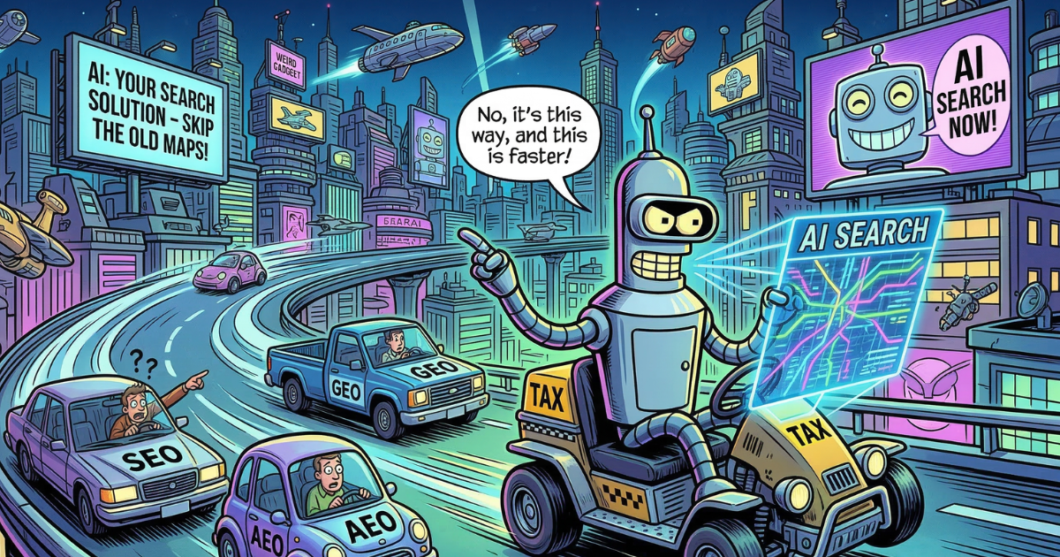
The Way People Discover Businesses Online Is Changing
For many years, digital marketing followed a familiar pattern. Businesses focused on search engines, social media, and increasingly AI search as the main ways customers discovered information online.
In the Caribbean especially, social media became the default digital strategy for many businesses. A Facebook page, an Instagram account, and occasional posts were often treated as the entire online presence.
But the way people discover businesses online is changing rapidly.
More people are now turning to AI search tools to ask questions, research services, and explore ideas. Instead of scrolling through social feeds or clicking through multiple websites, users can now receive direct answers generated by artificial intelligence.
But the internet has changed.
Today, people are discovering businesses in very different ways. Instead of scrolling through social feeds, they are increasingly searching for answers.
They ask questions like:
- “Best restaurants in Port of Spain”
- “How to start an online business in the Caribbean”
- “Best marketing strategies for small businesses”
In the past, these questions were typed into search engines like Google Search, which returned a list of websites.
Now something new is happening.
People are increasingly asking those same questions directly to artificial intelligence tools such as ChatGPT, Google Gemini, and Perplexity AI.
Instead of simply showing a list of links, these platforms generate complete answers, summarizing information from multiple sources across the internet.
This shift is transforming how businesses become visible online.
Digital discovery is no longer limited to traditional search engines. Today it includes:
- Search engines
- AI assistants
- Voice search
- Generative AI answers
In other words, the internet is moving from search results to intelligent answers.
For businesses, this change is introducing a new set of terms that marketers around the world are now discussing:
- SEO (Search Engine Optimization)
- AEO (Answer Engine Optimization)
- GEO (Generative Engine Optimization)
- AI Search
While these terms may sound technical, they all relate to one core idea: how businesses become discoverable online.
SEO has traditionally focused on helping websites appear in search engines.
AEO focuses on helping content appear in direct answers to questions.
GEO focuses on ensuring content is referenced when AI tools generate responses.
And AI search represents the broader shift toward conversational discovery, where people interact with AI systems instead of simply browsing links.
For Caribbean businesses, this shift matters more than many realize.
Across the region, many companies are still building their digital foundations. Yet globally, the way people find information online is already evolving rapidly.
Businesses that understand this shift early have an opportunity to position themselves ahead of the curve — not just locally, but internationally.
Understanding SEO, AEO, GEO and AI search is the first step toward doing exactly that.
What Is SEO (Search Engine Optimization)?
Before artificial intelligence entered the search experience, the main way people discovered websites online was through search engines like Google Search and Bing.
When someone searched for a product, service, or question, search engines would scan the internet and return a list of websites that seemed most relevant.
This is where SEO, or Search Engine Optimization, comes in.
SEO is the practice of improving a website so that it appears higher in search results when people search for specific topics.
For example, if someone in Trinidad searches for:
- “digital marketing consultant Trinidad”
- “how to start an online business”
- “best restaurants in Port of Spain”
Search engines analyze thousands of websites and rank the ones that appear most useful and trustworthy.
Businesses that practice SEO are essentially making it easier for search engines to understand their content and recommend it to users.
How Search Engines Understand Websites
Search engines rely on automated systems known as crawlers or bots that scan websites across the internet.
These bots analyze things like:
- the content on a page
- how a website is structured
- how pages link to each other
- how other websites reference it
If a website is clear, well-structured, and contains useful information, it is more likely to appear in search results.
Several key elements help search engines understand a website:
Quality Content
Search engines prioritize websites that answer real questions and provide helpful information.
Website Structure
Clear headings, organized pages, and internal links help search engines understand the topic of a page.
Authority and Trust
Websites that are referenced or linked to by other reputable sources tend to rank higher.
Technical Foundations
Things like page speed, mobile friendliness, and proper indexing ensure search engines can access and understand a website.
Why SEO Is Still the Foundation
Even as AI-powered search tools become more common, SEO remains the foundation of digital visibility.
This is because AI systems often rely on the same web content that search engines index.
When platforms like ChatGPT, Perplexity AI, or Google Gemini generate answers, they frequently draw information from websites that are already well-structured, authoritative, and easy to understand.
In other words, if your content cannot be discovered by search engines, it becomes much harder for AI systems to reference it.
For Caribbean businesses, this is an important reminder.
While social media platforms can help build awareness, search visibility creates long-term discoverability.
A well-optimized website allows a business to be found by people who are actively searching for information, solutions, or services.
And in the evolving digital landscape, SEO is not disappearing. Instead, it is becoming the foundation that supports the next generation of search technologies.
What Is AI Search?
For more than two decades, the internet has been built around a familiar experience: type a query into a search engine and receive a list of links.
Users would then click through several websites to find the information they needed.
Today, that experience is beginning to change.
Instead of simply presenting links, new search technologies are increasingly providing direct answers.
This shift is being driven by artificial intelligence systems such as ChatGPT, Perplexity AI, and Google Gemini, which allow users to ask questions in a conversational way.
For example, instead of typing a short search query like:
“marketing strategies small business”
A user might now ask a full question such as:
“What are the best digital marketing strategies for small businesses in the Caribbean?”
The AI system then scans information across the web and generates a structured response, summarizing the most relevant insights.
In many cases, these answers appear instantly — often with citations or references to the sources where the information originated.
This new approach is commonly referred to as AI Search or Generative Search.
From Search Results to Intelligent Answers
Traditional search engines focused on returning a list of possible sources.
AI-powered systems are designed to go one step further by:
- understanding the user’s question
- gathering information from multiple sources
- synthesizing the information into a clear response
Instead of visiting five or six websites to find an answer, users can often receive a comprehensive explanation in seconds.
This change is already influencing how people research topics, compare products, and learn about services.
It is also changing how businesses become visible online.
Why AI Search Matters for Businesses
When AI systems generate answers, they rely heavily on existing web content.
This means the information that businesses publish on their websites, blogs, and digital platforms plays a critical role in shaping the responses users see.
Content that is:
- clear
- well-structured
- authoritative
- easy to understand
is more likely to be recognized and referenced by AI systems.
For businesses, this represents a major shift.
Visibility online is no longer just about appearing in the top ten search results. It is increasingly about becoming part of the information that AI systems use when generating answers.
A New Layer of Digital Discovery
AI search does not replace traditional search engines. Instead, it adds another layer to how people discover information online.
Today, discovery happens across multiple environments:
- traditional search engines
- AI assistants
- voice interfaces
- conversational search platforms
For Caribbean businesses, this evolution highlights an important opportunity.
Many companies across the region are still focused primarily on social media visibility. While social platforms remain valuable, the rise of AI search shows that owning and structuring your digital content is becoming even more important.
Businesses that create useful, well-organized information today are more likely to be discovered not only through search engines, but also through the AI systems that increasingly shape how people explore the internet.
What Is AEO (Answer Engine Optimization)?
As search technology evolves, another concept is becoming increasingly important in digital marketing: Answer Engine Optimization, often referred to as AEO.
While SEO focuses on helping websites appear in search results, AEO focuses on helping content appear in direct answers to questions.
Over the last several years, search engines have begun displaying answers directly on the results page. Instead of requiring users to click through multiple websites, the search engine highlights a specific answer that appears at the top of the page.
These are commonly known as featured snippets, quick answers, or voice search responses.
For example, if someone searches:
“What is digital marketing?”
Search engines may display a short definition from a website directly at the top of the results.
That website becomes the source of the answer.
Answer Engine Optimization is the practice of structuring content so that search engines and AI systems can easily extract those answers.
Why Answer Engines Exist
The goal of answer engines is simple: provide users with the fastest and most accurate information possible.
Platforms like Google Search, ChatGPT, and Perplexity AI are all moving toward a model where users receive information more quickly and efficiently.
To do this, these systems look for content that clearly explains topics in a structured and easy-to-understand way.
Content that works well for AEO often includes:
- clear definitions
- question-and-answer sections
- step-by-step explanations
- structured headings
When content is written in this format, answer engines can easily extract key information and present it to users.
How AEO Differs from Traditional SEO
Traditional SEO often focused on ranking pages within search results.
AEO focuses on helping content become the actual answer to a user’s question.
In other words, instead of simply appearing in a list of results, the goal is for your content to become the highlighted explanation.
This approach is becoming more important as voice assistants and AI-powered search experiences continue to grow.
When someone asks a question using voice search, the system typically returns one spoken answer, not a list of ten websites.
That answer usually comes from content that has been structured in a way that answer engines can easily understand.
Why AEO Matters for Caribbean Businesses
For many businesses in the Caribbean, the focus of digital marketing has traditionally been on social media engagement.
However, the rise of answer engines highlights the importance of creating informational content that helps people solve problems and understand topics.
Businesses that publish helpful explanations, guides, and educational content are far more likely to appear in these answer formats.
This creates an opportunity for Caribbean companies to position themselves as trusted sources of information, not just service providers.
In the evolving world of digital discovery, businesses that can clearly answer questions are often the ones that become most visible online.
What Is GEO (Generative Engine Optimization)?
As artificial intelligence becomes more integrated into how people search for information, a new concept has emerged in digital marketing: Generative Engine Optimization, commonly referred to as GEO.
While AEO focuses on helping content appear in direct answers within search engines, GEO focuses on helping content become part of the responses generated by AI systems.
Today, millions of people are turning to platforms like ChatGPT, Perplexity AI, and Google Gemini to ask questions, research topics, and explore ideas.
These systems don’t simply list websites the way traditional search engines do. Instead, they analyze information across the web and generate a detailed response based on multiple sources.
In many cases, the AI will also cite or reference the sources that influenced the answer.
Generative Engine Optimization is the practice of ensuring that your content is structured and authoritative enough to become one of those referenced sources.
How Generative Search Works
Generative AI systems are designed to analyze large volumes of information and produce a clear response to a user’s question.
When someone asks a question, the system typically goes through several steps:
- It interprets the intent behind the question.
- It retrieves relevant information from across the internet.
- It synthesizes the information into a single response.
Because of this process, the AI tends to rely on content that is:
- well organized
- clearly written
- factually reliable
- widely referenced or trusted
Content that meets these criteria has a higher chance of being included when AI tools generate responses.
The Importance of Authority and Structure
One of the key differences between traditional SEO and GEO is the emphasis on credibility and clarity.
Generative AI systems tend to favor sources that demonstrate:
- clear expertise
- well-structured explanations
- consistent publishing on a topic
For example, if someone asks an AI system:
“What is the future of digital marketing?”
The system will likely draw from articles, research papers, expert commentary, and reputable publications that regularly discuss that subject.
Businesses and professionals who consistently publish valuable insights on a topic increase the likelihood that their content will be referenced in these AI-generated responses.
Why GEO Matters for Caribbean Businesses
For businesses across the Caribbean, Generative Engine Optimization presents an important opportunity.
Much of the content that AI systems currently reference comes from North America, Europe, and larger global publications. As a result, perspectives from smaller regions are often underrepresented.
This creates a gap that Caribbean businesses, entrepreneurs, and thought leaders can fill.
By publishing insightful content about regional industries, digital transformation, entrepreneurship, and technology, Caribbean voices can begin to influence how AI systems explain these topics globally.
In other words, GEO is not just about visibility.
It is about ensuring that the knowledge and perspectives of Caribbean professionals are represented in the next generation of digital discovery.
What Is AIO (AI Optimization)?
As search technology evolves, many marketers are now using a broader term to describe this new digital landscape: AI Optimization, often referred to as AIO.
AIO represents the overall strategy of optimizing content so it can be discovered across both traditional search engines and AI-driven platforms.
In many ways, AIO is the umbrella that connects everything discussed so far:
- SEO helps websites appear in search engines.
- AEO helps content appear as direct answers to questions.
- GEO helps content become part of AI-generated responses.
AIO brings these approaches together into a single strategy focused on digital discoverability in the age of artificial intelligence.
The Internet Is Becoming an AI Discovery Layer
For years, digital visibility was primarily about ranking on search engines.
Today, information is being surfaced across a much wider ecosystem.
People now discover content through:
- traditional search engines like Google Search
- conversational AI tools like ChatGPT
- AI-powered search platforms such as Perplexity AI
- generative AI systems like Google Gemini
In each case, the platforms are analyzing information across the web and surfacing content they believe is most relevant to the user’s question.
AIO focuses on ensuring that your content can be understood, trusted, and referenced across all of these environments.
What AI Systems Look for in Content
AI systems are designed to prioritize information that is:
- clear and easy to understand
- structured logically with headings and sections
- consistent in topic expertise
- published on credible websites
Content that demonstrates these qualities is easier for AI systems to interpret and incorporate into responses.
This is why long-form educational content, research-driven articles, and well-organized guides are becoming increasingly important in the modern digital ecosystem.
Why AIO Matters for Caribbean Businesses
For Caribbean businesses, AI Optimization highlights an important shift in how digital visibility works.
Many companies across the region have focused primarily on social media marketing, which can be effective for engagement but does not always create long-term discoverability.
Search engines and AI systems rely heavily on owned digital assets, particularly websites, blogs, and structured content.
Businesses that invest in creating helpful information about their industry, services, and expertise are far more likely to appear in search results and AI-generated responses.
In practical terms, this means that building a strong digital presence today is no longer just about posting content on social platforms.
It is about creating a knowledge base that search engines and AI systems can understand and reference.
This shift is already underway globally, and Caribbean businesses that begin adapting early will be better positioned to compete in the evolving digital economy.
Why This Matters for Caribbean Businesses
For many businesses across the Caribbean, digital marketing has traditionally centered around social media platforms.
Facebook pages, Instagram profiles, and more recently TikTok accounts have become the primary way many companies communicate with customers online. While these platforms are useful for visibility and engagement, they often function as rented digital space.
Businesses do not control the platform, the algorithms, or how content is distributed.
At the same time, the way people search for information online is rapidly evolving.
Search engines, AI assistants, and generative platforms are becoming major discovery channels, helping users find information, services, and expertise faster than ever before.
This shift means that businesses with structured digital content and strong websites are increasingly positioned to benefit.
The Caribbean Has a Visibility Opportunity
One of the most interesting aspects of this shift is that many Caribbean industries remain underrepresented online.
Much of the information that search engines and AI systems rely on still comes from larger markets like the United States, Canada, and Europe.
When users ask questions about topics related to the Caribbean — whether it’s tourism, business, culture, technology, or entrepreneurship — there is often limited local content available for these systems to reference.
This creates a powerful opportunity.
Caribbean entrepreneurs, professionals, and organizations that begin publishing high-quality information can quickly become trusted sources on regional topics.
Instead of relying only on international publications to define the narrative, businesses and experts in the region can begin contributing their own insights, data, and perspectives.
From Social Media Presence to Digital Authority
For many companies, the next stage of digital growth will involve moving beyond social media and building digital authority.
Digital authority develops when a business consistently publishes valuable information about its area of expertise.
Over time, search engines and AI systems begin recognizing that business as a credible source on specific topics.
This can lead to:
- stronger search visibility
- increased trust from potential customers
- more opportunities to be referenced or cited online
In other words, businesses that invest in educational and informative content are not just marketing their services — they are building a knowledge footprint on the internet.
Preparing for the Next Era of Discovery
The rise of AI search does not mean traditional marketing strategies will disappear.
Social media, advertising, and brand storytelling will all remain important.
However, the future of digital visibility will increasingly revolve around information and expertise.
Businesses that answer questions, explain complex topics, and provide valuable insights will naturally become more discoverable across search engines and AI platforms.
For Caribbean companies, this moment represents a chance to move beyond simply participating in the digital economy and begin shaping it.
Understanding how SEO, AEO, GEO, and AI search work is the first step toward building a digital presence that can thrive in this new era of online discovery.
Conclusion: Preparing for the Future of Digital Discovery
The way people find information online is evolving rapidly.
For many years, businesses focused primarily on appearing in search engine results. More recently, many companies shifted their attention toward social media as the primary channel for reaching audiences.
Today, a new layer of digital discovery is emerging.
Search engines are becoming more intelligent, and artificial intelligence tools are increasingly helping users find answers, explore topics, and make decisions online. Platforms like ChatGPT, Perplexity AI, and Google Gemini are changing how information is delivered, moving the internet toward a more conversational and knowledge-driven experience.
This shift has introduced new concepts such as SEO, AEO, GEO, and AI Optimization, all of which focus on one central goal: ensuring that businesses and professionals remain visible in an increasingly intelligent digital ecosystem.
For Caribbean businesses, understanding these concepts is especially important.
The region is still in the early stages of building strong digital infrastructure and online knowledge resources. Yet this also presents a unique opportunity. Businesses that begin creating useful, well-structured, and educational content today can position themselves as trusted sources within their industries.
In the years ahead, the companies that stand out online will not simply be those with the largest advertising budgets or the most social media followers.
They will be the businesses that consistently publish valuable information, answer important questions, and contribute meaningful insights to the digital landscape.
In many ways, the future of digital marketing is becoming less about chasing algorithms and more about sharing knowledge.
And for Caribbean entrepreneurs, professionals, and organizations, that future is already beginning.
Let’s Talk Strategy Now
Now that you understand what all of this means and how AI search is changing the game, the next step is strategy—how to actually position your business to be found, recommended, and chosen.
Read the next article here: How to Get Your Business Found, Recommended, and Chosen by AI
Want Your Business to Show Up in AI Search?
The shift toward AI-powered discovery is already underway. If you want help preparing your business to appear in AI search results and building a stronger digital presence, we can work through it together.
Book a strategy session and let’s get your business positioned for the future of online discovery.