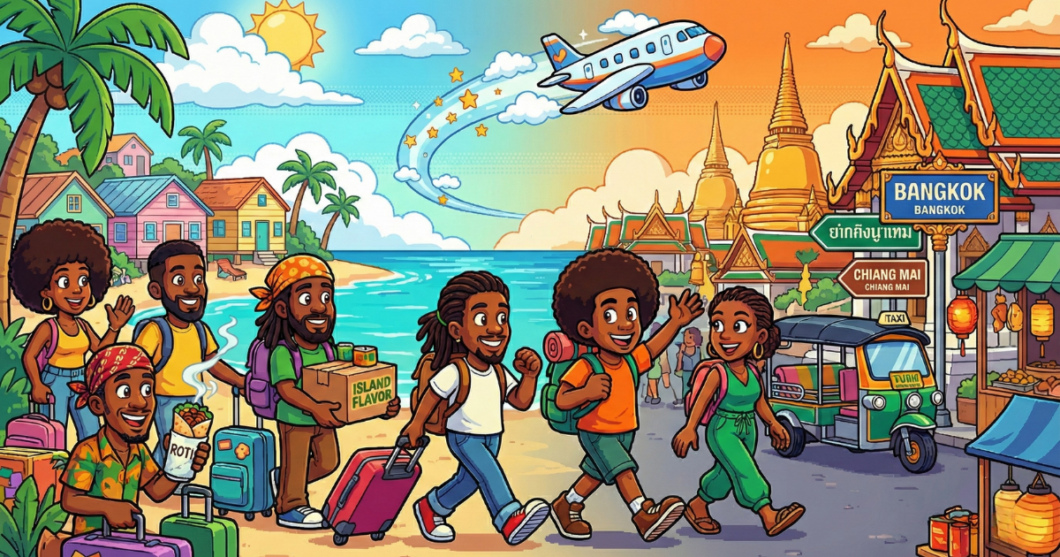
1. Why Thailand Is on the Caribbean Migration Radar
For decades, migration conversations across the Caribbean have followed a predictable pattern. When people consider moving abroad, the same destinations come up almost by default: the United States, Canada, and the United Kingdom. These routes feel familiar because of historical ties, shared language, and long-standing diaspora networks. They are the places Caribbean families have traditionally looked to for opportunity.
But familiarity has not meant accessibility.
In recent years, those traditional pathways have become increasingly difficult to navigate. Long visa backlogs, tightening immigration rules, rising housing costs, and extended periods of uncertainty have made migration to these countries more complex and expensive than ever before. For many Caribbean nationals, the process can take years — sometimes decades — with no guarantee of success.
What is less discussed is that this level of difficulty is not universal.
Over the last few years, Thailand has quietly restructured its immigration system to attract a different kind of global migrant — not only tourists, but remote professionals, digital business owners, skilled talent, families, and retirees. Rather than relying on rigid, one-size-fits-all immigration models, Thailand has introduced multiple visa pathways that reflect how people actually live and work in a globalised, digital economy.
As a result, Thailand has become one of the most accessible long-stay destinations in the world, particularly for people earning income outside the country.
This shift reflects a broader change in how migration is being approached. For many Caribbean nationals, moving abroad is no longer about escaping hardship or “starting over” in the traditional sense. Instead, migration is increasingly strategic — a way to manage rising costs, create financial breathing room, access better infrastructure, and design a more flexible lifestyle without severing ties to home.
In that context, Thailand represents something different. It offers modern infrastructure, efficient public systems, strong healthcare, regional mobility across Asia, and a cost structure that allows people to live well without constant financial pressure. Importantly, it does this without demanding immediate permanent residency or long periods of uncertainty.
The year 2026 marks a turning point. Remote work has become normalised, digital businesses are no longer fringe, and families are increasingly willing to consider non-traditional destinations if the quality of life makes sense. At the same time, global mobility has become more fragmented and expensive in the West.
For Caribbean professionals, families, and retirees willing to look beyond the usual options, Thailand is no longer an unconventional choice. It is a practical one — and one that reflects how the world, and work, now operate.
What This Guide Covers
This guide is designed to give Caribbean nationals a clear, practical understanding of what it actually takes to live in Thailand in 2026 — without hype, shortcuts, or guesswork.
Inside, you’ll find:
- How entry into Thailand works for Caribbean passport holders
- A simple breakdown of Thailand’s main visa options and who they are best suited for
- What daily life really costs, from housing and utilities to food and internet
- How foreigners manage money, pay rent, and handle bills without a local bank account
- The role of digital wallets, apps, and QR payments in everyday life
- Housing, connectivity, family considerations, and cultural realities
- What to think about before committing, and where professional advice is still necessary
The goal is not to sell a dream, but to present a realistic framework — so you can decide whether Thailand fits your life, your income, and your long-term plans.
2. Entry into Thailand: What Caribbean Nationals Need to Know
For many Caribbean nationals, entry into a foreign country is often the most stressful part of travel. Long lines, heavy questioning, and uncertainty at immigration are experiences many people have come to expect. Thailand operates very differently — and understanding the process ahead of time makes arrival straightforward.
Visa-free entry and extensions
Caribbean passport holders, including nationals of Trinidad and Tobago and Jamaica, currently benefit from visa-free entry into Thailand for up to 60 days. This stay can usually be extended by an additional 30 days from within Thailand, allowing visitors to remain in the country for up to 90 days without applying for a long-term visa.
This structure makes Thailand especially attractive for people who want to spend meaningful time in the country before committing to a longer-term arrangement. It allows prospective migrants to explore housing, understand living costs, and experience daily life without immediate pressure.
The TDAC: mandatory pre-arrival registration
Before travelling to Thailand, visitors must complete the Thailand Digital Arrival Card (TDAC). This replaces traditional paper arrival forms and captures most of the information immigration officers need in advance.
The TDAC is completed online at:
https://tdac.immigration.go.th
Once submitted, you receive a QR code, which should be saved on your phone (and optionally printed as a backup). This QR code is required on arrival and significantly speeds up the immigration process.
Yellow fever vaccination: a critical requirement for Caribbean travellers
Several Caribbean countries are classified as yellow fever–risk or conditionally affected. As a result, yellow fever vaccination is non-negotiable when entering Thailand.
On arrival, your first stop is not immigration. Caribbean travellers must first visit the Port Health Authority desk inside the arrivals area. Officers will:
- Review your yellow fever vaccination card
- Take basic information
- Issue a health clearance slip
This slip is then presented to the immigration officer. Without it, entry can be delayed or denied, so the vaccination card should always be treated as essential travel documentation.
The actual arrival process, step by step
When you land in Thailand, the arrival flow is typically:
- Proceed to the Port Health Authority (for yellow fever verification, if applicable)
- Receive the health clearance slip
- Join the immigration queue
- Present:
- Your passport
- Your TDAC QR code
- Your yellow fever clearance slip
- Your Thai visa (if you hold one)
If you are entering visa-free, no additional documents are required. If you hold one of Thailand’s long-stay visas, you simply present it alongside the above.
Because the TDAC already contains most personal and travel details, the interaction with the immigration officer is usually brief.
What arriving in Thailand is actually like
Thailand is built to handle volume.
Even during peak season, arrival systems are designed for scale. On arrival in January 2026 — one of the busiest travel periods of the year — thousands of passengers were moving through the airport simultaneously. Despite the crowd size, the line moved continuously, and baggage collection followed smoothly.
Thailand processes about 100,000 tourists per day and more than 120,000 tourists per day during peak season.
From landing to collecting bags took approximately one hour, even with peak-season traffic. The key difference was not the number of people, but the efficiency of the systems managing them.
This is an important distinction: waiting an hour while a line moves steadily feels very different from being stuck in a stagnant queue with little information or progress.
Lower entry friction than Western destinations
Compared to many Western countries, Thailand places far less friction at the point of entry. There are no pre-arrival interviews, no lengthy questioning for short stays, and no prolonged uncertainty once documentation is in order.
Thailand’s approach is simple:
- Make entry clear and accessible
- Capture information digitally in advance
- Enforce health and immigration rules consistently
For Caribbean nationals accustomed to complex visa processes elsewhere, this alone makes Thailand stand out as one of the more approachable destinations globally.
3. Thailand’s Visa Landscape (Simplified)
Thailand’s immigration system can look complex at first glance, but once it is broken down properly, it becomes far easier to navigate. The key is understanding that Thailand does not operate on a single migration model. Instead, it offers multiple pathways designed for different types of visitors, lifestyles, and stages of life.
Short-stay vs long-stay pathways
At the highest level, Thailand’s visas fall into two broad categories: short-stay and long-stay pathways.
Short-stay options include visa-free entry and tourist visas. These are designed for visitors who want to spend weeks or a few months in the country, explore different cities, or test whether life in Thailand is a good fit. For many Caribbean nationals, this is the ideal starting point — a low-commitment way to experience daily life without locking into long-term decisions.
Long-stay pathways, on the other hand, are built for people who already know they want more stability. These visas allow longer periods of stay, often with multiple entries, and are designed for people who plan to base themselves in Thailand for extended periods. This includes digital professionals, skilled talent, families, retirees, and students.
Understanding which category you fall into helps narrow your choices immediately and prevents unnecessary applications.
Lifestyle visas vs work-adjacent visas
Another useful way to think about Thailand’s visas is by purpose: lifestyle visas versus work-adjacent visas.
Lifestyle visas are designed around how you live, not where you work. They assume that your income is generated outside Thailand or through non-local means. The Destination Thailand Visa (DTV) and retirement visas fall into this category. These visas prioritise stability, flexibility, and quality of life rather than local employment.
Work-adjacent visas, such as the SMART (Talent) Visa, are tied more closely to skills, industries, and economic contribution. These visas are designed for professionals whose expertise aligns with Thailand’s development goals. While they allow work-related activities, they are still structured differently from traditional work permits used in Western countries.
This distinction is important. Thailand is not forcing everyone into an employer-sponsored model. Instead, it recognises that modern work takes many forms — remote, freelance, entrepreneurial, and project-based.
Choosing a visa based on life stage and goals
One of the biggest mistakes people make when approaching Thailand’s immigration system is trying to find the “best” visa in isolation. The better approach is to choose a visa based on where you are in life and what you are trying to achieve.
Someone early in their career may prioritise flexibility and experimentation. A digital professional might want a visa that supports location independence without local employment. A family may value stability, schooling options, and multi-year validity. A retiree may prioritise healthcare access and predictable living costs.
Thailand’s visa structure makes it possible to move between these stages over time. Many people start with short stays, transition into lifestyle visas, and later shift into longer-term resident or retirement options as their circumstances change.
Why Thailand offers options
Perhaps the most distinctive feature of Thailand’s immigration system is that it does not force immediate permanence. There is no expectation that entering the country means committing to residency, citizenship, or irreversible decisions.
Instead, Thailand offers optionality. You can enter easily, stay legally, extend your time, upgrade your visa, or leave and return — all within a clear, structured framework.
This approach removes much of the psychological pressure associated with migration. It allows people to make informed decisions gradually, based on lived experience rather than assumptions.
For Caribbean nationals accustomed to rigid systems elsewhere, this flexibility is one of Thailand’s greatest advantages — and one of the main reasons it has become an increasingly attractive destination in 2026.
4. The Destination Thailand Visa (DTV): The Game-Changer
Among Thailand’s newer visa options, the Destination Thailand Visa (DTV) stands out as the most relevant and impactful for Caribbean professionals. It reflects a major shift in how Thailand views modern work — recognising that income can be earned globally while life is lived locally.
Who the DTV Is Designed For
The Destination Thailand Visa (DTV) is designed for individuals who can support themselves financially without entering Thailand’s local labour market, either through overseas income or participation in approved long-stay activities that align with Thailand’s cultural, wellness, and soft-power initiatives.
While the DTV is commonly associated with remote work, its scope is much broader.
It is suitable for:
- Digital professionals working remotely for overseas companies
- Freelancers and consultants providing services to international clients
- Business owners running online or internationally focused businesses
- Creators earning income from content, audiences, digital products, or intellectual property
In addition to income-based profiles, the DTV also supports long-stay participation in recognised Thai soft-power and lifestyle activities, including:
- Muay Thai training programmes, whether for fitness, discipline, or professional development
- Thai language study, including long-term language courses and immersion programmes
- Thai massage and traditional wellness training, where participants are learning or engaging in structured programmes
- Medical and wellness-related stays, such as long-term treatment, recovery, or health optimisation programmes
- Cultural and creative engagements connected to Thailand’s broader soft-power ecosystem
What unifies all DTV holders is not occupation, but self-sufficiency. Applicants must demonstrate that they can sustain themselves financially and that their activities do not replace or compete with local employment.
For Caribbean nationals, this wide scope is especially important. It means the DTV is not limited to technology workers or digital nomads, but also applies to individuals seeking structured self-development, health, cultural immersion, or lifestyle-based stays — all within a clear and legal framework.
In short, the DTV reflects how people live today: earning globally, learning continuously, and choosing where to base their lives intentionally.
Core Benefits of the DTV
The real strength of the Destination Thailand Visa lies in how its entry and stay periods are structured, offering long, predictable time in the country with minimal administrative burden.
- Five-year validity
The DTV is valid for five years, reducing the need for frequent visa reapplications and providing long-term flexibility. - 180-day stay on every entry
Each time you enter Thailand using the DTV, you are granted a 180-day stay. This applies on every entry — not just the first. If you leave Thailand and re-enter, even after a short trip, you receive a new 180-day entry stamp on arrival. - Two ways to extend your time — with one important rule
As your 180-day stay approaches its end, you have two legal options:- Apply for a 180-day extension at a Thai immigration office, or
- Leave Thailand and re-enter, at which point a fresh 180-day stay is issued automatically.
- Why many DTV holders travel instead of extending
While both options are valid, many DTV holders prefer to travel and re-enter rather than spend time at immigration offices. Short trips to neighbouring countries such as Vietnam, Cambodia, Laos, or Malaysia are relatively affordable and convenient, making travel a practical alternative.
This structure allows individuals to remain based in Thailand for long periods without constant visa renewals, while still maintaining compliance. It provides stability, flexibility, and clarity — a combination that is rare in most long-stay visa systems.
Financial Threshold: The 500,000 THB Requirement
A core requirement for the Destination Thailand Visa is proof of financial stability. Applicants must demonstrate a minimum balance of 500,000 Thai baht, which is approximately US$14,000–15,000, depending on exchange rates.
Thai immigration now expects to see that this amount was maintained for at least three months prior to application. In practice, this means submitting three months of bank statements from your home-country bank clearly showing the required balance. The funds must be traceable and consistently held — last-minute deposits are more likely to raise questions.
This requirement is intended to ensure that DTV holders can support themselves during their stay and are not financially dependent on local employment in Thailand.
Visa application fee (important clarification)
In addition to meeting the financial threshold, applicants must pay a visa application fee. The listed fee for the DTV is typically 10,000 Thai baht, which is roughly US$275–300, depending on exchange rates.
However, the actual amount paid can vary by country and processing embassy, as fees are often charged in local currency by the Thai embassy or consulate handling the application.
For example, my application was processed through the Thai Embassy in Ottawa, and I was charged 650 Canadian dollars, which is approximately US$480–490. This difference reflects local processing costs and currency conversion rather than a change in visa type.
Key points to understand:
- The 500,000 THB balance is not a fee and is not paid to the Thai government
- The application fee is separate, non-refundable, and paid during the visa process
- Fees may differ depending on where your application is processed
Applicants should budget for both the financial threshold and the application fee, and should always check the fee listed by the specific Thai embassy or e-visa portal handling their application.
Proof of income and documentation expectations
Beyond bank balances, applicants are typically required to show evidence of ongoing income or professional activity. This may include:
- Client contracts (I provided just 1, and that was fine)
- Business registration documents
- Proof of freelance or consulting work (contracts or your portfolio will work)
For Caribbean applicants, this documentation must often be notarised and then taken to the relevant Ministry of Foreign Affairs for an apostille, certifying the documents for international use. While this adds an extra step, it is a familiar process for Caribbean nationals dealing with international paperwork.
Digital application and approval process
Applications for the DTV are submitted online through Thailand’s official e-visa platform at:
https://www.thaievisa.go.th/visa/dtv-visa.
The entire process is digital. Once approved, the visa is issued electronically with a QR code, eliminating the need for embassy visits, passport stamping, or physical paperwork. The digital format also simplifies arrival, as the visa can be presented directly from a mobile device.
It took me exactly 2 weeks from start to finish, getting all of my documents together, notarized and then approved by Thai Immigration.
Bringing spouse and children
One of the DTV’s most significant advantages is its family-friendly structure. Visa holders are allowed to relocate with their spouse and children, making it a realistic option for families rather than just individuals.
This stands in contrast to many Western migration systems, where family reunification can take years and involve significant cost and uncertainty.
Why the DTV matters for Caribbean earners
For Caribbean professionals, the DTV represents something fundamentally different. It offers a legal, transparent way to live in a modern, well-connected country while earning income internationally.
Instead of battling restrictive work permits or long immigration queues, the DTV allows Caribbean earners to:
- Lower living costs
- Preserve income earned abroad
- Gain geographic flexibility
- Build businesses or careers without constant immigration stress
In 2026, the DTV is more than just another visa. For many in the Caribbean, it is the first long-stay option that aligns with how they already work — and how they want to live.
5. Other Visas Worth Knowing (High-Level)
While the Destination Thailand Visa is the most relevant option for many Caribbean professionals, it is not the only pathway worth understanding. Thailand’s visa system is designed to accommodate different life stages, income levels, and long-term intentions. Knowing the alternatives helps people identify whether another route may be a better fit — either now or in the future.
SMART (Talent) Visa
The SMART Visa is aimed at individuals with specialised, in-demand skillsets that align with Thailand’s economic development priorities. Unlike lifestyle visas, this option is closely tied to expertise and industry relevance.
Who qualifies
This visa is intended for highly skilled professionals with strong credentials, experience, and often higher income levels. Applicants are typically expected to demonstrate specialised knowledge rather than general remote work capability.
Eligible skillsets and industries
Fields commonly associated with the SMART Visa include:
- Technology and software development
- Engineering and advanced manufacturing
- Robotics and automation
- Biotechnology and medical innovation
- Digital platforms and emerging technologies
The focus is on skills that contribute to Thailand’s long-term competitiveness rather than general services.
Who it’s not for
The SMART Visa is not designed for freelancers, general remote workers, or digital nomads whose work is not tied to specialised or strategic industries. For most location-independent professionals, lifestyle visas such as the DTV are usually more appropriate.
Long-Term Resident (LTR) Visas
LTR visas are designed for individuals seeking long-term stability in Thailand and who meet higher financial or professional thresholds.
These visas typically cater to:
- High-income professionals
- Senior executives and business leaders
- Investors with substantial assets
- Retirees with strong financial backing
Some LTR categories can be valid for up to ten years and may include additional benefits related to residency stability. This pathway is best suited for individuals who already have significant income, assets, or career seniority and are planning a long-term base in Thailand.
Education Visas
Education visas are issued to individuals enrolled in recognised educational institutions in Thailand. This includes:
- Thai language schools
- Universities and degree programmes
- Approved vocational or training institutions
- Muay Thai Schools
- Thai Cooking Schools
Many people use education visas as a lifestyle bridge — a way to live in Thailand legally while studying, learning the language, or exploring longer-term options.
However, education visas are not intended as permanent migration solutions. They come with attendance and compliance requirements and are best viewed as a temporary, structured entry point rather than a long-term strategy.
Retirement Visas
Thailand offers several retirement visa options for individuals aged 50 and over.
Age requirements
Applicants must be at least 50 years old at the time of application.
Financial expectations
Retirement visas typically require proof of:
- A minimum level of savings, pension income, or a combination of both
- Health insurance coverage
These visas are popular among retirees seeking a lower cost of living, access to quality healthcare, and a comfortable lifestyle without the pressures of employment.
Understanding the bigger picture
Each of these visas serves a different purpose. Some are designed for career-driven professionals, others for lifestyle, education, or retirement. The key is recognising that Thailand does not offer a single “best” visa — it offers options.
For Caribbean nationals, understanding these pathways early makes it easier to plan strategically, avoid unnecessary applications, and choose a visa that aligns with both current needs and future goals.
Teaching in Thailand: A Proven Migration Pathway
Another highly practical — and often overlooked — way to migrate to Thailand is through teaching. For Caribbean nationals, this route has quietly become one of the most reliable entry points into the country, especially for those seeking structured employment, longer-term visas, and local integration.
Demand goes beyond English teachers
Thailand has long recruited English teachers, but demand has expanded significantly in recent years. As more foreigners relocate to Thailand for work, business, and lifestyle reasons, international schools have grown rapidly, with many receiving new funding, expanding campuses, or opening entirely new schools.
As a result, there is increasing demand not only for English teachers, but also for:
- Primary school teachers
- Subject teachers (math, science, humanities)
- Early childhood educators
- Teaching assistants and support staff
This growth has created more opportunities for qualified teachers at different experience levels.
TEFL / TESOL as a gateway
For those without formal teaching degrees, obtaining a TEFL or TESOL certification is a common and accepted pathway into teaching in Thailand. These certifications are widely recognized and are often the minimum requirement for English teaching roles.
For Caribbean nationals considering relocation, completing a TEFL or TESOL course can:
- Open access to legal teaching positions
- Support work-permit and visa applications
- Provide structured income while settling into Thailand
Many teachers use this route as either a long-term career move or a medium-term transition while exploring other opportunities.
International schools and professional teaching roles
For qualified teachers with degrees and classroom experience, international schools present another strong option. These schools typically offer:
- Higher salaries than language centres
- Structured contracts
- Benefits such as housing allowances or health coverage
- Stable visa and work permit sponsorship
With the growth of foreign families in Thailand, international schools are becoming an increasingly important part of the education landscape.
Where to find teaching jobs
One of the most established and trusted platforms for teaching jobs in Thailand is Ajarn:
https://www.ajarn.com/
Ajarn lists a wide range of opportunities, from entry-level English teaching roles to positions at international schools. It’s a useful starting point for understanding salary ranges, requirements, and the types of schools hiring across different regions of Thailand.
Why teaching works as a migration strategy
Teaching offers something many other pathways don’t: structure. It provides:
- Legal employment
- A clear visa and work-permit route
- Immediate income
- Faster integration into local systems
For Caribbean nationals who may not yet have remote income, digital businesses, or large savings, teaching can be a realistic and accessible way to establish a life in Thailand.
In many cases, people arrive as teachers and later transition into other careers, businesses, or visa categories once they are settled. As a migration strategy, teaching doesn’t lock you in — it gets you in.
For more info on Teaching Abroad, check this out —> Your Guide To Teaching Abroad.
6. Cost of Living in Thailand: What It Actually Looks Like
One of the biggest reasons Thailand has moved onto the radar for Caribbean nationals is cost of living — but not in the way it’s usually discussed. This isn’t about “living cheaply” or cutting corners. It’s about living predictably, with far more control over monthly expenses than most small island economies allow.
From personal experience, Thailand fundamentally changes how far your money goes.
Housing: modern living without premium pricing
Housing is where the difference becomes immediately clear. In Thailand, especially in cities like Bangkok and Chiang Mai, modern condos with amenities such as gyms, pools, co-working spaces, and shared facilities are common — and affordable.
My own monthly rent is US$400 for a brand-new condominium with a rooftop pool, gym, co-working space, private onsen, theatre room, and content studio. Comparable living arrangements in many Caribbean cities would be significantly more expensive, often without the same infrastructure or consistency.
To understand the housing market before arriving, platforms such as Hipflat, ddproperty, and Fazwaz are extremely useful. They give a realistic view of pricing, neighbourhoods, and the range of options available. Studio apartments in newer developments can start as low as US$200 per month, while larger apartments or houses can be found from US$500 and up, depending on location.
Utilities: low, stable, and predictable
Utility costs are another major shift. Electricity in Thailand is regulated and far more stable than what many Caribbean households are used to. Despite regular air-conditioning use, my electricity bill has ranged between US$10 and US$40, with US$40 being the highest I’ve paid.
Water costs are negligible — around US$1.50 per month — and outages are rare in major urban areas. The predictability alone removes a constant source of financial anxiety.
Internet and mobile connectivity
High-speed internet is widely available and affordable. I pay US$20 per month for a 500/500 fibre connection, which is more than sufficient for video calls, content creation, and remote work.
Mobile service is equally straightforward. A reliable plan costs about US$20 per month with 50gb of 5G data speeds, and bills can be paid easily through provider apps, websites, or payment kiosks in shopping malls. There are cheaper plans or more expensive ones, depending on your usage. I am currently with True, but AIS has great reviews as well.
For anyone earning online, this level of connectivity is not a luxury — it’s essential infrastructure, and Thailand delivers it consistently.
Food and daily expenses
Food is another area where Thailand offers flexibility. I spend roughly US$300 per month covering groceries, eating out, and food delivery. Local meals are affordable and widely available, while international options are easy to find when you want variety.
The key advantage is choice: you can eat well without overspending, and you can scale your food budget up or down depending on lifestyle preferences.
Transportation and healthcare
Public transportation in Bangkok and other major cities is efficient and inexpensive, reducing the need for owning a vehicle. Ride-hailing services are widely used and affordable, making daily movement simple.
Healthcare is another strong point. Thailand has a well-established private healthcare system with modern facilities, English-speaking staff, and transparent pricing. For many Caribbean nationals, access to reliable healthcare without long wait times is a major quality-of-life improvement.
Why this matters for Caribbean nationals
The biggest shift Thailand offers is financial breathing room. When housing, utilities, internet, food, and transportation are all manageable, people regain control over their time and income.
Instead of constantly working to cover basic costs, Thailand allows you to:
- Reduce financial pressure
- Save or reinvest more easily
- Build businesses or careers with less stress
- Focus on lifestyle, health, and long-term planning
7. Finding Housing as a Foreigner in Thailand
Finding housing in Thailand is far more straightforward than many Caribbean nationals expect — but knowing where to look makes a big difference.
Facebook groups: real-time deals and flexibility
One of the most effective ways to find housing in Thailand is through Facebook rental groups. Realtors and landlords frequently post listings in real time, often including new units that haven’t yet appeared on major property websites.
One group that has consistently produced results is:
Bangkok Expats condo-house for rent (short term / long term)
Both of my last two condos were found through Facebook groups like this. The advantage is speed and variety. Listings are often posted daily, and you can directly message agents or owners to ask questions, request videos, or arrange viewings quickly. It’s also common to find flexible lease terms or units that are priced more competitively than what appears on large portals.
Because posts move fast, checking these groups regularly is key. You may come across deals that are gone within days, especially in popular buildings.
Property websites: understanding the market
While Facebook groups are great for finding deals, property websites are essential for understanding the overall housing landscape. Platforms such as Hipflat, DDProperty, and FazWaz allow you to see pricing trends, compare neighbourhoods, and get a sense of what different budgets realistically offer.
These websites are particularly useful before arriving in Thailand. They help set expectations around:
- Typical rental prices
- Condo sizes and layouts
- Amenities included in newer developments
- Differences between neighbourhoods
Many of these platforms also allow you to book viewings directly, making it easy to schedule multiple appointments once you’re on the ground.
Condos vs houses: what most foreigners choose
Most foreigners, especially those living in cities like Bangkok and Chiang Mai, opt for condominiums. Condos often come fully furnished and include shared amenities such as gyms, pools, co-working spaces, and security. This makes settling in faster and reduces upfront costs.
Houses are available — and can be surprisingly affordable — but they are more common outside dense city centres and may require more setup, including utilities and furnishings.
Working with agents and landlords
Real estate agents play a big role in Thailand’s rental market, and their fees are typically paid by the landlord, not the tenant. This means renters can work with agents without worrying about additional costs.
It’s common to communicate via messaging apps, share documents digitally, and move quickly once you find a unit you like. Deposits are usually one to two months’ rent, along with the first month paid upfront.
Why flexibility matters at the start
One important recommendation for newcomers is not to lock into a long-term lease immediately. The safest advice is to do an Airbnb or a hotel for the first month, this way you can check out the city and find the best neighbourhood that fits your needs. Some people will even do this for the first 3 months and take their time.
I decided I wanted stability from the beginning, so I stayed in a hotel for the first 4 days and then found a condo I liked, then signed a 1-year lease. For me, that gives me so much more peace because it got me into a nice, predictable routine quickly, I was able to lock in my budget, have stability and take my time getting to learn the city.
Thailand’s housing market gives you options. The goal isn’t to find the “perfect” place on day one — it’s to find a comfortable base, learn the layout of the city, and then optimise over time.
For Caribbean nationals used to tight housing markets and limited options, Thailand’s rental ecosystem can feel refreshingly open. With a mix of Facebook groups for speed and property websites for structure, finding housing becomes less stressful and far more flexible than expected.
Here’s an example of a 1Br Condo for 18,000 Baht – $570usd
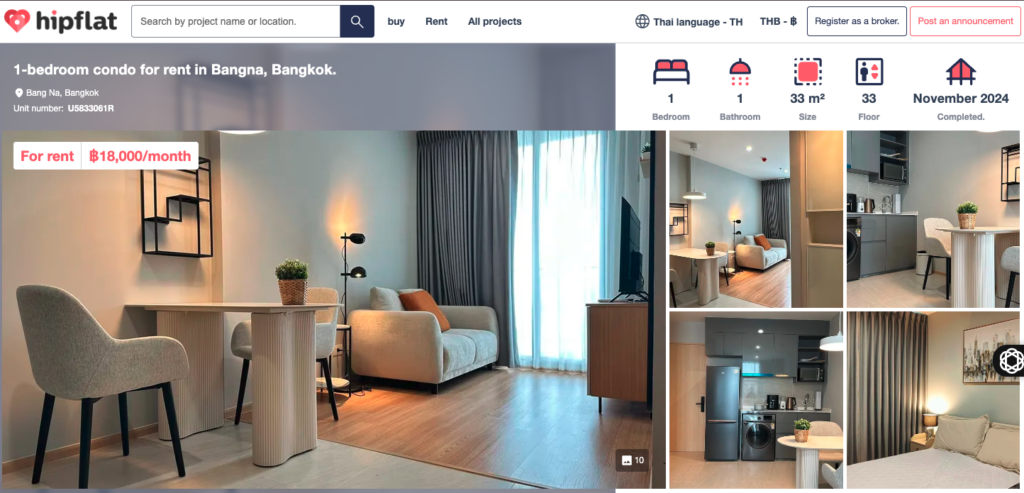
1BR Condo, Brand New and Fully Furnished.
- You get:
- Swimming Pool
- Fitness & Sauna
- Co-working Lounge
- Outdoor Garden | Dining Area | 24/7 Security




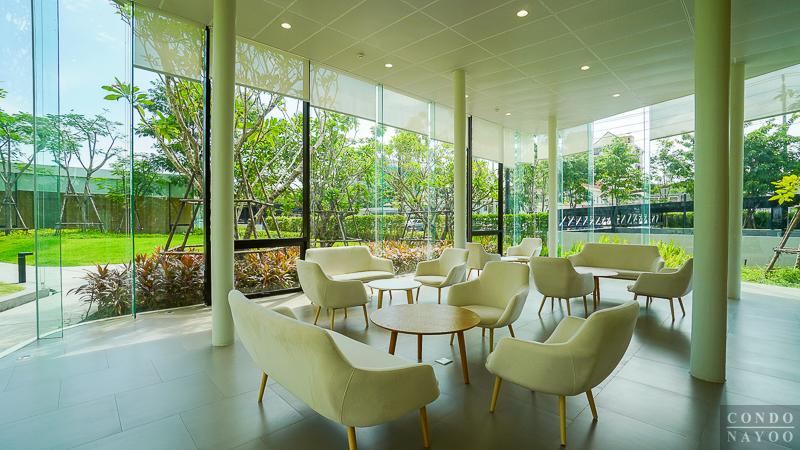
This is one of the many brand new condos in Bangkok; this particular one is called Skyrise Avenue Sukhumvit 64.
8. Paying for Life in Thailand (When You Don’t Have a Local Bank Account)
One of the most common questions people have before moving to Thailand is whether they will be able to open a local bank account. The short answer is: it depends on your visa.
Opening a Thai bank account: the reality
As a general rule of thumb, short-term visa holders are usually not able to open Thai bank accounts. This includes people entering visa-free, on tourist visas, or on other short-stay arrangements. While you may hear stories online about accounts being opened with the help of agents while on tourist visas, I can’t personally validate those experiences.
Speaking only from direct experience, banks in Thailand are increasingly strict about account eligibility.
Longer-term visas and statuses are far more likely to qualify, including:
- Visas linked to work permits
- Long-Term Resident (LTR) visas
- Certain retirement visas
- Other structured long-stay visas where residency status is clearly established
In these cases, banks are generally more comfortable opening accounts because the visa signals longer-term presence and regulatory clarity. Even then, requirements can vary by bank and branch.
For anyone arriving on short-term arrangements, the practical assumption should be that you may not have access to a local bank account initially.
Living comfortably without a Thai bank account
The good news is that Thailand’s financial infrastructure makes this far less restrictive than it sounds.
In my own case, I’ve been living comfortably using international banking tools rather than a local Thai account. Platforms like Wise and overseas bank accounts have been sufficient for handling day-to-day expenses.
By adding digital debit cards to Google Wallet or Apple Pay, it’s possible to tap your phone to pay for the vast majority of transactions — supermarkets, restaurants, cafés, transport, and retail. In practical terms, this covers around 90% of everyday spending.
Digital wallets and QR payments
Thailand operates one of the most advanced national QR payment systems globally. Almost every business — from street vendors to major retailers — accepts QR payments.
To access this system without a Thai bank account, I use Moreta Pay, a digital wallet that enables QR payments across Thailand and other parts of Asia. At present, Moreta Pay supports Business QR payments in Thailand, which already covers a large portion of merchants.
In December, it was announced that approvals had been granted to expand this to Personal QR payments as well. Once fully rolled out, this will allow payments to individuals directly, further reducing the need for cash.
Another option worth exploring is TrueMoney, a popular digital wallet in Thailand with wide merchant acceptance. Setup requirements vary, but it is another example of how cashless living is possible without a local bank account.
Paying rent and utilities
Rent and household bills are usually handled differently from everyday spending. This is where communication with your landlord becomes important.
In practice, many landlords are very accommodating with foreign tenants. Common arrangements include:
- Paying rent via Wise or international transfer
- Having the landlord pay electricity and water bills on your behalf
- Adding utility costs to your monthly rent payment
This simplifies life significantly, removing the need to navigate multiple billing systems or payment locations.
If you prefer to pay utilities yourself, electricity and water bills can also be paid easily at 7-Eleven locations, which are everywhere in Thailand.
Internet and mobile payments
Mobile phone and home internet services are easy to manage. Bills can usually be paid:
- Through provider websites
- Via mobile apps
- At payment kiosks in shopping malls
This makes staying connected simple, even without a Thai bank account.
Why this works in Thailand
Thailand’s systems are designed around digital payments and convenience. Unlike in many Caribbean countries where cash still dominates and digital infrastructure is fragmented, Thailand’s ecosystem allows foreigners to function normally even without local banking access.
Until you qualify for a long-term visa that allows account opening, this setup is more than sufficient — and for many people, it becomes a permanent, low-friction way to manage money.
Cash is still widely accepted all across Thailand.
9. Essential Apps, Connectivity, and Daily Systems
One of the biggest adjustments for people moving from the Caribbean to Thailand is realising how app-driven everyday life is. Thailand is not just digitally connected — it is digitally organised. Most daily tasks that would require in-person visits, phone calls, or cash back home can be handled quickly through a smartphone.
This ecosystem significantly reduces friction for foreigners.
Getting around: transport and mobility
Ride-hailing and delivery platforms are deeply embedded into daily life. Services like Grab or Bolt are used for taxis, food delivery, and even small parcel drop-offs. Pricing is transparent, wait times are short, and the apps are fully functional in English.
For many people, this removes the need to own a car entirely, especially in cities like Bangkok and Chiang Mai.
In Bangkok, you have extensive coverage from the MRT or BTS train systems, making it easy and affordable to navigate the entirety of Bangkok.
Shopping and e-commerce
Online shopping is another area where Thailand excels. Platforms such as Lazada and Shopee function as all-purpose marketplaces — similar to Amazon — offering everything from groceries and electronics to household items and clothing.
Deliveries are fast, often same-day or next-day, and prices are competitive. For newcomers, this makes setting up a home quick and stress-free.
Wellness, services, and lifestyle bookings
Thailand’s service economy is also app-based. Platforms like Gowabi allow users to book gyms, massages, spa treatments, fitness classes, and other services at discounted rates.
This makes wellness and self-care not only accessible, but routine — a noticeable shift for many Caribbean professionals accustomed to limited availability or higher costs.
Tourism, activities, and local experiences
For navigating attractions, events, and local experiences, Thailand offers official digital tools such as TAGTHAi, which is also a digital wallet that can be used for making payments through the Thai QR code system. These platforms help users discover activities, events, and locations without relying on physical tour desks or agents.
Check out Get Your Guide to book thousands of experiences all across Thailand.
Even outside of tourism, many local experiences are now surfaced digitally, reducing language barriers and guesswork.
Payments and digital wallets
Payments are where Thailand’s systems truly stand out. The country operates a national QR payment network, and nearly every business — from malls to street vendors — accepts QR payments.
To access this ecosystem without a Thai bank account, digital wallets play a key role. Moreta Pay allows users to pay via Thailand’s QR system, while TrueMoney is another widely accepted option for everyday transactions.
Combined with international debit cards added to mobile wallets, this makes cash increasingly optional.
Connectivity: mobile and internet infrastructure
Mobile and internet connectivity underpin everything else. High-speed mobile data is affordable and reliable, and home internet connections with strong upload and download speeds are common even in residential buildings.
Bills are easily managed through provider apps, websites, or payment kiosks in shopping malls. For anyone working remotely or running a digital business, this level of infrastructure removes a major point of friction.
Why this matters for Caribbean nationals
In many Caribbean countries, digital services exist — but they are fragmented. Payments, transport, utilities, and services often require different systems, physical visits, or cash.
Thailand’s advantage is integration. Once you’re set up, daily life requires less effort, fewer errands, and less mental load. That efficiency compounds over time, freeing up energy for work, family, and personal goals.
For people relocating from the Caribbean, this app-first environment is one of the most underrated — and transformative — aspects of living in Thailand.
10. Family Life, Culture, and Final Considerations
Beyond visas, cost of living, and systems, the most important question is whether Thailand works as a place to actually live — not just visit. For many Caribbean nationals, the answer increasingly comes down to family considerations, cultural adjustment, and long-term sustainability.
Family life and schooling options
Thailand has seen a steady rise in international migration, and this has driven rapid growth in international schools, particularly in Bangkok, Chiang Mai, and Phuket. Families can choose from British, American, IB, and hybrid curricula, along with bilingual options that blend international standards with Thai culture.
School quality and cost vary widely. Top-tier international schools can be expensive, comparable to global private-school pricing, while mid-tier and bilingual schools often provide strong value. Some families also opt for online or hybrid education models, using Thailand as a base while maintaining international curricula.
The key takeaway is choice. Thailand does not force families into a single model — it offers multiple pathways depending on budget, educational philosophy, and long-term plans.
Living without speaking Thai
A common concern for Caribbean nationals is language. In practice, it is entirely possible to live comfortably in Thailand without speaking Thai, especially in major cities.
Most apps, government systems, transport platforms, and service providers offer English interfaces. Translation apps fill gaps quickly, and everyday interactions — ordering food, paying bills, navigating services — are rarely a source of stress.
That said, learning basic Thai is strongly encouraged. Even conversational ability improves daily interactions, shows cultural respect, and deepens the experience of living in the country. Language learning in Thailand is widely accessible and affordable, making it a natural part of integration rather than a barrier.
Cultural adjustment and everyday norms
Thai culture places a strong emphasis on politeness, respect, and non-confrontation. This is often a positive shift for people coming from more stressful or bureaucratic environments.
Understanding basic cultural norms — how to interact respectfully, how to navigate public spaces, and how to manage disagreements calmly — goes a long way. Most foreigners find that when they approach Thailand with openness and humility, the country is remarkably welcoming.
Compliance and personal responsibility
While Thailand is accessible, it is also structured. Visa conditions, reporting requirements, and entry rules are enforced consistently. Understanding and respecting these rules is essential.
One important point worth reiterating is taxation. Every individual’s situation is different. Income sources, residency duration, and personal circumstances all matter. Rather than relying on general advice, it is strongly recommended to consult a local Thai tax professional who specialises in working with foreigners. A short consultation can clarify obligations and prevent costly misunderstandings later.
11. Finding Work and Income Opportunities in Thailand
Once lifestyle and logistics are addressed, the next question is income — how you sustain yourself while living in Thailand.
Foreigners typically rely on a mix of local employment, global income, and network-driven opportunities. Below are the primary platforms and pathways to explore.
Job Platforms (Starting Point)
These platforms are commonly used for structured employment, particularly in corporate and multinational environments.
- JobsDB The leading job board in Thailand for professional roles. Best for positions in finance, technology, engineering, logistics, and multinational companies. Many listings indicate whether visa sponsorship is available.
- LinkedIn Essential for both job searching and networking. Many roles are filled through direct outreach, recruiter connections, and referrals before being publicly listed.
- WorkVenture Focused on startups, technology companies, and modern workplaces. Strong for roles in marketing, creative industries, and digital businesses.
- Indeed Aggregates listings across multiple industries including hospitality, healthcare, and entry-level roles.
Recruitment Agencies
For mid- to senior-level roles, recruitment firms are often the most effective pathway. They also assist with visa and work permit processes.
- Michael Page Corporate, finance, and technology roles.
- Robert Walters Senior-level placements and specialized positions.
- PRTR One of the largest agencies in Thailand, covering a wide range of industries.
- JAC Recruitment Strong in bilingual and regional roles, particularly within multinational environments.
Networking and Referrals
A significant portion of roles in Thailand are filled through networking rather than public listings.
- Industry events and professional meetups
- Chambers of Commerce and business groups
- Direct outreach to hiring managers and recruiters on LinkedIn
- Referrals from existing employees
Many opportunities are never formally advertised, making networking a key part of the job search process.
Facebook Groups and Informal Channels
Facebook groups act as real-time job boards, particularly for teaching, freelance, and creative roles.
- Foreigner Jobs in Thailand
- Bangkok Digital Nomads
- Expat and industry-specific groups
These platforms can surface opportunities quickly, but they are less regulated, so due diligence is required.
Key Industries Hiring Foreigners
Certain sectors are more accessible to foreign professionals:
- Education – Teaching roles, international schools, and training institutions
- Technology – Software development, data, artificial intelligence, and digital platforms
- Digital Marketing – Content creation, strategy, and performance marketing
- Hospitality – Management roles in hotels and resorts
- Corporate Roles – Multinational companies and regional headquarters
Remote Work and Global Income
Not all foreigners work for Thai companies.
Many professionals live in Thailand while earning income from outside the country through:
- Remote employment with overseas companies
- Freelancing and consulting
- Online businesses
Visa structures such as the Destination Thailand Visa (DTV) support this model, allowing individuals to reside in Thailand while working for non-Thai entities.
If you are exploring this route, I have also compiled a list of top international remote job boards to help you get started – The Top International Remote Job Boards.
Important Considerations
- Local employment typically requires a Non-Immigrant B visa and a work permit
- Employers must meet specific requirements to hire foreign workers
- Some professions are restricted to Thai nationals
- Salary thresholds and experience levels may apply
Key Takeaway
Thailand offers multiple pathways to generate income, but success depends on understanding how the system works.
Whether through job platforms, recruiters, networking, or remote work, the goal is to align your skills with the right opportunity and ensure your visa pathway supports how you plan to earn.
Is Thailand right for everyone?
Thailand offers flexibility, affordability, and efficiency — but it is not a universal solution. People who require rigid structure, fixed career paths, or constant familiarity may struggle with the adjustment. Likewise, those unwilling to adapt to different cultural norms may find the transition challenging.
However, for Caribbean nationals who value mobility, digital opportunity, lifestyle balance, and strategic living, Thailand offers something rare: optionality.
Final thoughts
Migration in 2026 no longer follows a single path. It is no longer limited to a few traditional destinations or defined solely by permanent relocation.
Thailand represents a different model — one that allows people to enter easily, live legally, adjust gradually, and make informed decisions over time. For Caribbean professionals, families, retirees, and students willing to think beyond the familiar, Thailand is not an experiment.
It is a viable, practical option — and one that reflects how the world now works.
Need Professional Help Migrating To Thailand?
You can check out Thai Kru, they are the relocation services I was going to use if I found it to difficult to do on my own. They have always been well-recommended and were very good at answering all of my questions when I reached out to them. Check them out here –> Thai Kru Agency.
Hi Good morning I would to learn more about your experience
Thanks for the information. Definitely worth the read.