For the past few years, the dominant advice in digital marketing has been simple and loud: create more video. Short-form video, long-form video, daily video, vertical video. The underlying belief has been that more output would naturally lead to more reach, more engagement, and ultimately, more results.
But in 2026, that assumption is starting to break down.
Yes, more people are online than ever before. But how they spend their time, where they pay attention, and when they make decisions have all shifted. Usage is fragmented across platforms, formats, and moments of the day. Attention is thinner. Intent is more deliberate. And most importantly, results are no longer tied to volume alone.
Let’s be clear from the start: this is not an argument against video. Video remains one of the most powerful tools for storytelling, awareness, and emotional connection. What is failing businesses, however, is the idea that video on its own — especially video created solely for social media — is a complete digital marketing strategy.
The real issue is this: many businesses are unconsciously adopting the content creator playbook. They are optimizing for visibility, trends, and algorithms, rather than for trust, authority, and decision influence. That framework works for creators whose goal is reach and engagement. It does not work for businesses that need to build credibility, shorten sales cycles, and be chosen when it matters.
Businesses don’t win by going viral.
They win by being trusted.
In 2026, digital marketing is no longer about producing more content for the sake of activity. It’s about building systems — ecosystems of assets, channels, and signals that consistently show up where customers learn, evaluate, and make decisions. Video is part of that system. But on its own, it is no longer enough.
This article breaks down why the video-only mindset is holding businesses back — and what a more strategic, authority-driven approach to digital marketing needs to look like moving forward.
What This Article Covers
1. The Attention Shift
Why audience behavior has changed — and how fragmented attention and intent are reshaping where decisions actually happen.
2. The Creator Trap
How businesses unknowingly adopted a content-creator mindset — and why optimizing for algorithms and virality undermines long-term growth.
3. Why Video Alone Falls Short
Where video excels, where it fails, and why relying on it as a standalone strategy leads to diminishing returns.
4. AI, Search & Decision Environments
How AI tools, search engines, and high-intent platforms are changing how people research, verify, and choose businesses.
5. Learning Styles & Multi-Format Strategy
Why authority requires written, audio, and visual assets — and how different formats serve different cognitive and decision-making roles.
6. The Ecosystem Model
How to structure digital marketing around owned, earned, shared, and paid channels instead of isolated content posts.
7. PR & Authority Building
Why pitching stories to media — starting locally — creates credibility, visibility, and ongoing opportunities as a resident expert.
8. The Caribbean Context
Why blending traditional media trust with digital platforms is especially powerful in small and developing markets.
9. What to Focus on in 2026
A clear strategic reset: what businesses should stop chasing — and what they should start building instead.
2. The Attention Shift Nobody Wants to Admit
One of the most uncomfortable truths in digital marketing today is this: being online more does not mean paying attention more.
Yes, global social media user numbers continue to rise. But time spent per person has quietly declined, and attention is now split across more platforms, formats, and moments than ever before. The result isn’t less consumption — it’s fragmented consumption.
People bounce between apps. They scroll in short bursts. They skim instead of dive. And crucially, they move between modes of consumption depending on what they’re trying to do in that moment.
This is where many marketing strategies fall apart — because they assume all attention is equal.
It isn’t.
Not All Platforms Serve the Same Intent
Social media is still powerful, but its role has shifted.
Social platforms are primarily used for:
- Discovery
- Light engagement
- Entertainment
- Staying loosely informed
This is where people notice things. It’s where brands get a first impression. But it’s rarely where serious evaluation or decision-making happens — especially for services, higher-priced products, or anything that carries risk.
When people want to make sense of something — to compare, verify, or decide — they leave the feed.
That’s when they turn to:
- Search engines
- AI tools
- Long-form articles
- Podcasts
- YouTube deep dives
- Books, reports, and written explanations
These environments are fundamentally different. They are lean-in spaces, not passive scroll zones. Attention is slower. Intent is higher. Trust is built over time, not seconds.
Consumption Has Shifted — Not Disappeared
The mistake many businesses make is assuming that declining engagement on social media means people are “tuning out.” What’s actually happening is more nuanced.
People aren’t consuming less information.
They’re consuming differently.
They read in quieter moments.
They listen while driving, walking, or working.
They watch long-form content when they want depth — not dopamine.
And often, they do these things away from their phones, or at least away from social feeds.
This is where the pool-side metaphor matters.
You can sit by a pool without scrolling endlessly. You can spend that time reading a book, listening to audio, or thinking deeply — all while learning. That kind of consumption doesn’t show up in social media engagement metrics, but it is often where real understanding is formed.
Why This Matters for Businesses
If businesses continue to measure success only by:
- Likes
- Views
- Reach
- Engagement
They will consistently miss where influence is actually happening.
Attention today is:
- Distributed across formats
- Context-driven
- Closely tied to intent
Social media is one part of that journey — not the destination.
Understanding this shift is the first step toward building a digital marketing strategy that reflects how people actually behave in 2026, rather than how platforms want us to believe they behave.
And once you accept that reality, the next question becomes unavoidable: why are so many businesses still marketing as if the feed is the only place that matters?
That’s where the real problem begins.
3. The Creator Trap: Why Businesses Are Playing the Wrong Game
One of the biggest reasons digital marketing feels exhausting and ineffective for so many businesses in 2026 is simple: they’re using the wrong framework.
Over the last few years, the rise of the creator economy blurred an important distinction. As influencers, YouTubers, and social personalities found success by mastering algorithms and trends, their tactics became the default blueprint for everyone else — including businesses that were never meant to operate like media personalities.
And that’s the trap.
Creator Thinking vs. Business Thinking
Content creators optimize for:
- Reach
- Engagement
- Virality
- Algorithm favor
Their success depends on attention volume. If a video performs today, it doesn’t matter if it disappears tomorrow — there’s always another post, another trend, another hook.
Businesses, however, don’t survive on attention alone.
Businesses must optimize for:
- Trust
- Authority
- Recall
- Decision influence
Those outcomes are cumulative. They compound over time. And they are far less forgiving of volatility.
When businesses adopt a creator-first mindset, they begin to chase the wrong signals. They obsess over views instead of comprehension. They measure success by engagement instead of confidence. And they mistake visibility for credibility.
The Problem With Rented Land
Most creator-driven strategies are built on platforms the business does not own.
Algorithms change.
Formats fall out of favor.
Reach evaporates overnight.
When your entire marketing effort lives on social feeds, you’re operating on rented land — investing time, money, and energy into systems designed to serve the platform first, not your business.
This creates a fragile model where:
- Consistency becomes burnout
- Production becomes pressure
- Creating content starts to get expensive
- Performance becomes unpredictable
For small teams and owner-led businesses, this is especially dangerous. The expectation that you must constantly film, edit, post, and perform is not scalable — and it rarely aligns with the actual work of running a business.
Virality Is Not a Business Outcome
Going viral feels productive, but virality does not equal progress.
A video can reach thousands of people who:
- Are not in your market
- Are not ready to buy
- Will never return
Meanwhile, the people who are evaluating, comparing, and deciding may never see that content at all — because they are not scrolling when those decisions are being made.
This is where many businesses experience a quiet frustration:
- “We’re posting consistently.”
- “The content is good.”
- “But nothing is converting.”
The issue isn’t effort.
It’s alignment.
Businesses Don’t Win by Being Entertaining
Creators are rewarded for being entertaining.
Businesses are chosen for being reliable, competent, and trusted.
When a customer is about to spend money, hire a service, or commit to a long-term relationship, they are not asking:
- “Who has the most engaging Reels?”
They are asking:
- “Who knows what they’re doing?”
- “Who can I trust?”
- “Who feels legitimate?”
Those questions are not answered by trends or hooks. They are answered by evidence, consistency, and presence across multiple decision environments.
Until businesses stop modeling their marketing after creators — and start building systems designed for authority — they will continue to work harder for diminishing returns.
And that leads directly to the next issue: why video alone, no matter how well produced, cannot carry that burden by itself.
4. Why Video Alone Cannot Carry Authority in 2026
Video is not the problem.
The expectation placed on video is.
Over the past few years, video has been asked to do everything at once: attract attention, educate, persuade, convert, and retain. That’s an unreasonable burden for any single format — especially one designed primarily for speed and consumption, not depth and verification.
Video excels at introductions. It communicates tone, personality, and intent quickly. It helps people decide whether they want to keep listening, keep watching, or look you up elsewhere. But that last part is critical — elsewhere.
Because authority is not built in moments.
It is built in layers.
Video Is an Entry Point, Not a Foundation
Short-form and even long-form video are excellent at:
- Creating awareness
- Establishing a human connection
- Communicating high-level ideas
- Making a brand feel approachable
But when it comes time to evaluate a business seriously, video quickly reaches its limits.
People don’t rewatch videos to confirm details.
They don’t scan videos to compare options.
They don’t cite videos when justifying decisions to others.
At the moment where confidence matters most, people slow down — and they look for clarity.
That clarity usually comes from:
- Written explanations
- Structured information
- Case studies
- Documentation
- Proof points
- Reviews
Video opens the door.
Authority lives inside the room.
The Intent Mismatch Problem
Most video content today is consumed in a lean-back state. People are relaxed, distracted, and often multitasking. They are open to ideas, but not committed to decisions.
Decision-making, however, happens in lean-in environments.
When someone is deciding:
- Which service provider to trust
- Which product to buy
- Which expert to listen to
They want:
- Precision
- Verification
- Depth
- The ability to move at their own pace
Video — especially social-first video — struggles here. It is linear, time-bound, and optimized for flow rather than reference. Once the video ends, the information disappears unless the viewer actively searches for it again.
That friction matters.
Video Does Not Scale Trust on Its Own
Trust is not just emotional — it’s structural.
For trust to form, people need to see consistency across:
- Multiple touchpoints
- Multiple formats
- Multiple moments
A business that only exists on social video often feels incomplete. There’s no obvious place to:
- Go deeper
- Validate claims
- Confirm expertise
- Understand context
This creates hesitation. And hesitation kills momentum.
In contrast, businesses that pair video with:
- Strong written content
- Search visibility
- Audio presence
- Media mentions
Feel grounded. They feel established. They feel safe to choose.
The Compounding Problem
Video content is fleeting by design. Even successful videos have short lifespans. Once the algorithm moves on, so does the attention.
Authority, on the other hand, compounds.
A well-written article can:
- Rank for years
- Be referenced repeatedly
- Be shared privately
- Be cited by AI tools
A podcast episode can:
- Build familiarity over time
- Create a sense of relationship
- Be consumed during focused moments
Video alone rarely compounds in this way — unless it is supported by an ecosystem that gives it context and permanence.
The Real Question Businesses Need to Ask
The question is no longer:
- “How much video should we make?”
The better question is:
- “What role should video play inside a larger system designed to build trust and influence decisions?”
Until businesses stop treating video as the strategy — and start treating it as one component of a broader authority engine — they will continue to see effort without leverage.
And that brings us to the next shift many businesses haven’t fully reckoned with yet: the rise of AI, search, and decision environments that don’t care how entertaining your content is — only how credible it is.
5. AI, Search & Decision Environments: Where Decisions Are Actually Being Made
One of the most misunderstood shifts in digital marketing right now is how people — and increasingly AI systems — decide who to trust.
Most businesses still think in terms of formats:
Should we do more video? More reels? More posts?
But AI doesn’t think in formats.
AI thinks in sources, signals, and environments.
And when you look at where large language models like ChatGPT, Perplexity, and AI-powered search tools actually pull information from, a very different picture emerges.
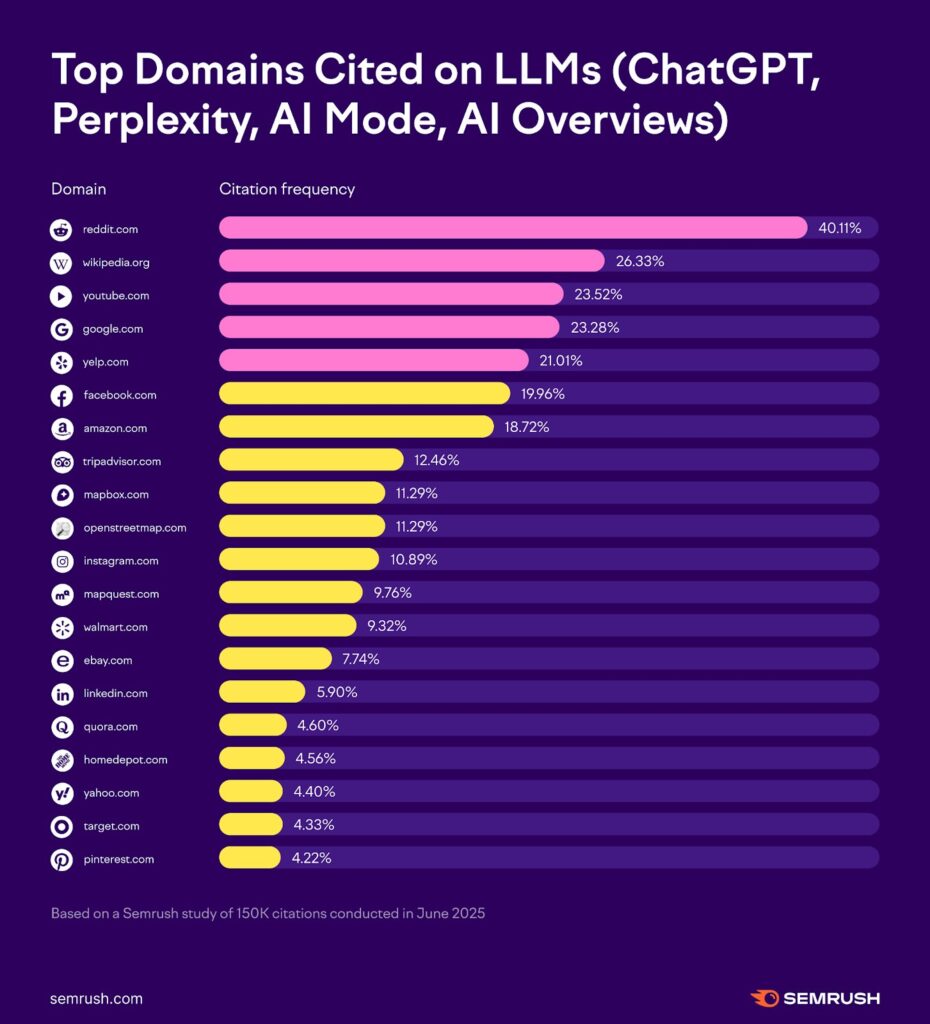
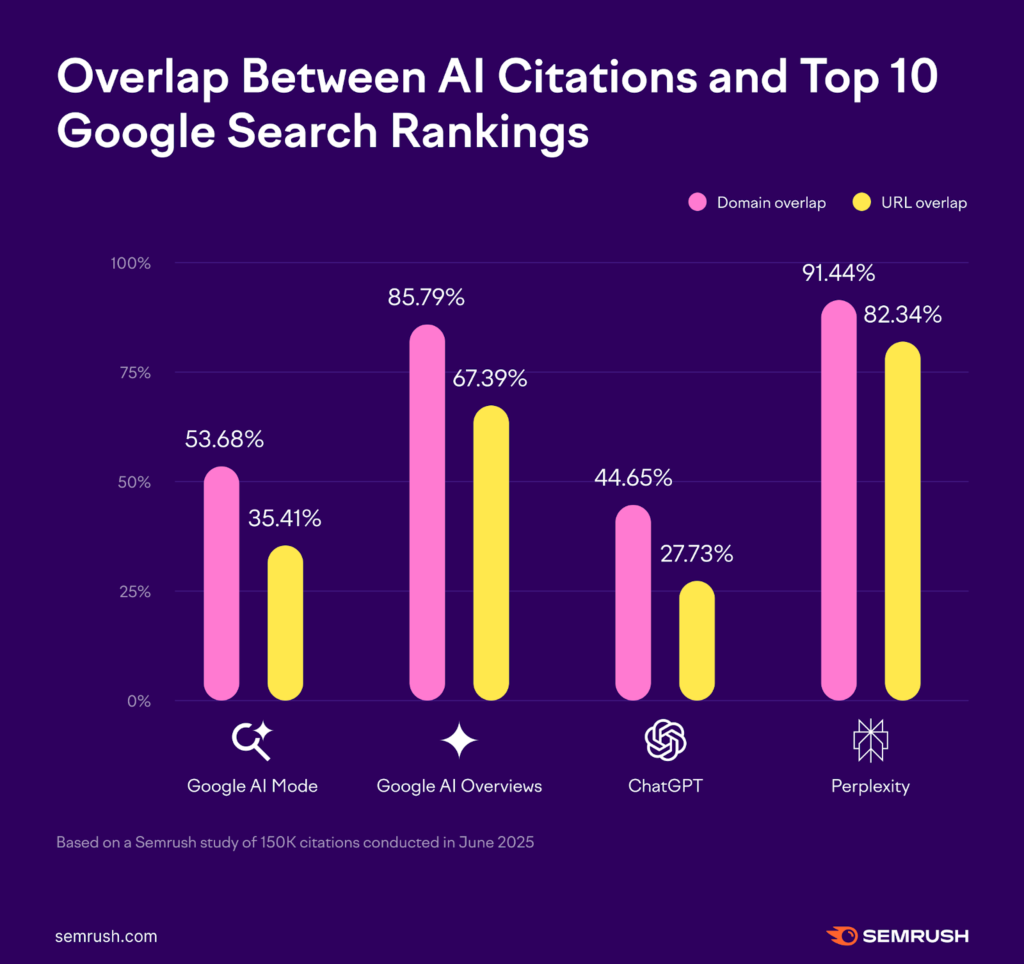
(Based on a Semrush analysis of ~150,000 AI citations, June 2025)
Read This Chart as Activities, Not Websites
This chart isn’t just a list of domains.
It’s a map of where authority is built.
Every source here represents an activity businesses need to be involved in if they want to show up in AI-driven answers:
- Wikipedia → structured knowledge and entity credibility
- Reddit & Quora → real-world discussion, consensus, lived experience
- YouTube → long-form explanation and education (not short viral clips)
- Google & Maps → verification, accuracy, business legitimacy
- Yelp & TripAdvisor → third-party validation and reputation
- LinkedIn → professional credibility and expert commentary
- Amazon, Walmart, Target → transactional trust
- News, reviews, and reference-style platforms → corroboration
What’s noticeably absent?
Short-form social video as a primary source of truth.
That doesn’t mean video is useless — it means video alone does not place you inside the environments AI relies on to answer questions.
AI Rewards Presence in Trusted Environments — Not Posting Volume
When people ask questions in AI tools, those systems are trying to reduce risk for the user. To do that, they prioritize information that is:
- Repeated across multiple trusted sources
- Documented and structured
- Verified through third parties
- Supported by consensus, not novelty
This is why brands with:
- Articles
- Case studies
- Media mentions
- Reviews
- Community participation
- Clear business information
Are far more likely to be surfaced than brands that are simply active on social media.
If your business exists mainly as:
- Instagram posts
- Reels
- TikToks
- Algorithm-driven clips
You may be visible — but you are not legible to AI.
Short Form Video Has a Role — But It’s Not the Authority Layer
Even YouTube’s strong presence in AI citations needs to be interpreted correctly.
AI systems don’t favor YouTube because of:
- Trends
- Shorts
- Viral entertainment
They favor YouTube because of:
- Long-form explainers
- Tutorials
- Interviews
- Educational content that can be transcribed, referenced, and corroborated
That distinction matters.
Video works best as:
- An entry point
- A trust accelerator
- A way to humanize expertise
But authority is reinforced elsewhere — in text, documentation, reviews, media, and verified sources.
Search Still Signals Intent — And Other Channels Feed It
Discovery happens everywhere.
Decision-making still leaves clues.
Research from Marketron and Radio Ink shows that radio advertising can increase branded search volume by up to 40%, highlighting how awareness created in one channel often converts into high-intent search behavior later (Marketron; Radio Ink, 2025).
Separate performance marketing research consistently shows that:
- Branded search traffic converts significantly better than non-branded traffic
- Branded campaigns often deliver 2–3× higher conversion rates and return on ad spend compared to generic search (Dreamdata; Google Ads benchmarks; WordStream)
The implication is clear:
Many channels create awareness.
Search captures intent.
And AI increasingly sits between the two.
What This Means for Businesses in 2026
If your digital strategy is built primarily around:
- Short-form video
- Platform-native content
- Algorithm-dependent visibility
You are optimizing for attention, not authority.
But if your business is:
- Written about
- Reviewed
- Discussed
- Referenced
- Verified
- Cited
Across multiple trusted environments, you become easier for both people and AI systems to trust.
In 2026, showing up in ChatGPT isn’t about gaming the system or posting more content.
It’s about earning presence in the places that shape understanding, confidence, and decisions.
And once you accept that, the next question becomes obvious:
if authority is built across environments, how do you design content that works for different learning styles and formats — without burning yourself out?
That’s where multi-format strategy comes in.
6. Learning Styles & Multi-Format Strategy: Authority Is Not One-Dimensional
One of the biggest blind spots in modern digital marketing is the assumption that everyone consumes information the same way.
They don’t.
People learn, process, and build confidence in very different ways — and those differences matter enormously when the goal is not attention, but understanding and trust.
This is why a single-format strategy, no matter how well executed, will always struggle to carry authority on its own.
People Don’t Just Prefer Different Formats — They Decide Differently
Some people:
- Need to read to fully understand
- Prefer to listen while driving, walking, or working
- Want to watch to get a sense of tone, credibility, and presence
These are not casual preferences. They are tied to how people internalize information.
Reading allows for:
- Slower processing
- Re-reading and verification
- Comparison and reference
Audio builds:
- Familiarity
- Trust through repetition
- A sense of relationship over time
Video creates:
- Emotional connection
- First impressions
- Confidence in the person behind the brand
Each format does a different job.
None of them replace the others.
Authority Requires Cognitive Reinforcement
Authority is rarely built in a single moment.
It’s built when someone:
- Sees you
- Hears you
- Reads your thinking
- Encounters your name again in another context
That repetition across formats reinforces confidence.
A video might spark interest.
An article might answer questions.
A podcast might deepen trust.
A media mention might validate legitimacy.
By the time a decision is made, the buyer often feels like:
“I’ve seen this person everywhere.”
That feeling doesn’t come from volume — it comes from presence across learning modes.
Why Single-Format Strategies Stall
When businesses rely on just one format — especially social video — they unintentionally exclude large segments of their audience.
- Readers are underserved
- Listeners are ignored
- Researchers have nothing to reference
This creates friction at the exact moment when clarity is needed.
For higher-value services, professional offerings, or anything involving risk, friction is fatal.
People want to confirm before they commit.
Confirmation usually happens through written explanations, detailed breakdowns, and trusted commentary — not through scrolling.
Multi-Format Is Not About Doing More — It’s About Doing Smarter
A multi-format strategy is not about producing endless content.
It’s about designing assets that travel.
One core idea can exist as:
- A video for awareness
- A blog for depth
- An audio episode for trust
- A media pitch for validation
This approach respects:
- Different learning styles
- Different moments of intent
- Different levels of readiness
And crucially, it reduces burnout — because you’re not constantly starting from scratch.
Designing for How People Actually Learn
When businesses design content around platforms, they chase trends.
When they design content around how people learn, they build leverage.
In 2026, authority belongs to brands that:
- Meet people where they are
- Respect how they process information
- Provide clarity across formats
- Allow buyers to move at their own pace
Video is powerful.
Audio is intimate.
Written content is decisive.
Authority lives in the combination, not the individual parts.
And once learning styles are accounted for, the next step becomes unavoidable: structuring all of these assets into a system that actually works together — instead of operating as disconnected pieces.
That’s where the ecosystem model comes in.
7. The Ecosystem Model: From Isolated Content to Strategic Presence
Once you accept that authority isn’t built in a single format, the next realization is unavoidable: content cannot exist in isolation anymore.
Posting videos here, writing blogs there, doing the occasional interview — without structure — creates activity, not leverage. What businesses need in 2026 is not more output, but integration.
This is where the ecosystem model becomes essential.
Stop Thinking in Channels. Start Thinking in Systems.
Most businesses still plan marketing like a checklist:
- Social media posts
- A few videos
- Maybe a blog
- Occasional ads
Each channel is treated as a separate effort, often managed independently, measured independently, and rarely connected.
An ecosystem approach flips that entirely.
Instead of asking:
- “What should we post this week?”
You ask:
- “What asset are we building, and how does it travel across the ecosystem?”
That shift alone changes everything.
Owned Media Is the Anchor (Not Social Media)
At the center of any sustainable digital ecosystem is owned media:
- Your website
- Your blog
- Your email list
- Your newsletters
- Your long-form resources
These are the assets you control.
They don’t disappear when algorithms change.
They compound over time.
They are readable, referenceable, and citable — by both humans and AI systems.
Social media’s role is not to replace owned media.
Its role is to point to it.
When social becomes the destination instead of the bridge, authority collapses the moment reach declines.
Earned Media Validates What You Claim
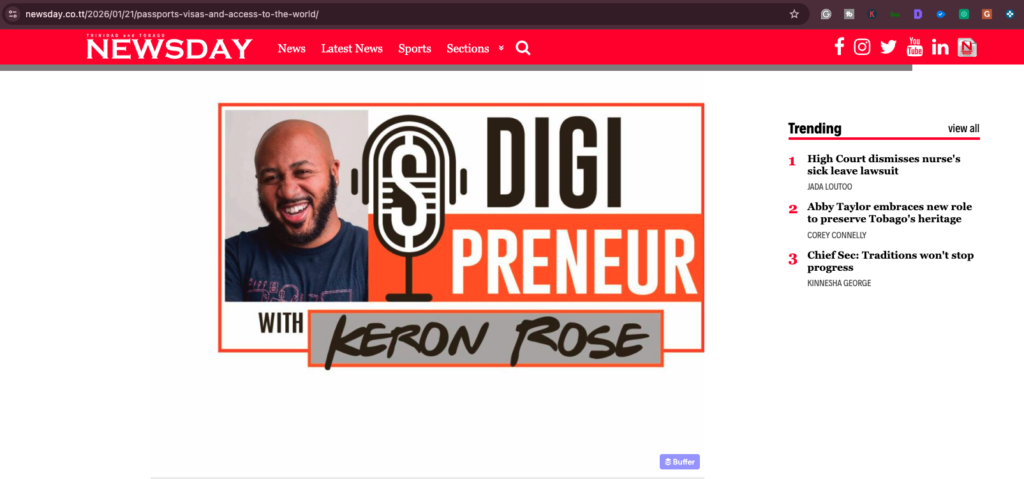
This is where PR and media exposure fit into the ecosystem.
Earned media includes:
- Newspaper features
- Radio interviews
- TV appearances
- Magazine mentions
- Expert commentary
These act as third-party validators.
You can say you’re an expert.
Earned media proves it.
Even more importantly, earned media:
- Reinforces trust for human audiences
- Strengthens credibility signals for search engines and AI
- Makes future media opportunities easier to land
Journalists look for people who have already been quoted.
Authority compounds when others speak about you.
Shared Media Amplifies — It Doesn’t Lead
Shared media (social platforms, video, community spaces) still matters — but its job is amplification, not authority.
This is where:
- Ideas are tested
- Visibility is generated
- Interest is sparked
But shared media is volatile by nature.
Reach rises and falls.
Formats change.
Attention moves on.
In an ecosystem, shared media:
- Drives traffic to owned assets
- Signals relevance
- Keeps the brand visible between deeper touchpoints
It does not carry the weight of credibility on its own.
Paid Media Accelerates What Already Works
Paid media should never be the foundation.
It should be the accelerant.
When used correctly, paid media:
- Boosts high-performing content
- Drives awareness to authoritative assets
- Retargets people already familiar with the brand
When used incorrectly, it becomes a crutch — propping up weak foundations with spend instead of strategy.
In an ecosystem, paid media amplifies clarity.
It doesn’t compensate for its absence.
What an Ecosystem Actually Feels Like to a Buyer
From the customer’s perspective, an ecosystem doesn’t feel complex.
It feels reassuring.
They:
- See your video on social
- Read your article when researching
- Hear you on a podcast or radio show
- Notice your name in the media
- Find consistent explanations across platforms
By the time they reach out, the question is no longer:
“Who is this?”
It becomes:
“I already trust this person.”
That is the outcome isolated content can’t achieve — no matter how good it is.
The Strategic Payoff
An ecosystem-based approach:
- Reduces dependence on any single platform
- Allows content to compound instead of expire
- Builds authority that survives algorithm changes
- Aligns marketing with how people actually decide
In 2026, the most effective businesses will not be the loudest.
They will be the most coherent.
And once that system is in place, the next question becomes practical rather than philosophical:
how do you turn one idea into multiple assets without doubling your workload?
That’s where PR, repurposing, and strategic execution come together.
8. PR & Media: How Authority Is Earned, Not Claimed
For many businesses, PR still feels like something reserved for big brands, celebrities, or crisis management. In reality, PR is one of the most underutilized authority tools available to small and mid-sized businesses — especially in 2026.
Because PR isn’t about publicity.
It’s about validation.
Authority Is Strongest When Others Speak for You
Anyone can call themselves an expert online.
Authority is established when someone else says it for you.
Media mentions — whether on TV, radio, print, or digital publications — act as third-party endorsements. They signal to audiences, search engines, and AI systems that:
- Your ideas are credible
- Your perspective matters
- Your expertise is trusted beyond your own platforms
This is why earned media carries far more weight than owned content alone.
PR Is an Activity, Not an Outcome
One of the biggest misconceptions about PR is that it’s passive — something that “just happens” when you’re big enough.
In reality, effective PR is intentional.
Businesses should be actively:
- Pitching relevant stories
- Offering commentary on current issues in their industry
- Providing expert insight journalists can use
- Starting with local media before aiming globally
Local radio, TV, newspapers, and digital publications are often the most accessible entry points. They are constantly looking for informed voices who can explain trends, provide context, or comment on what’s happening right now.
This is how you become:
“The person journalists call when they need an expert.”
Why Local Media Matters More Than People Realize
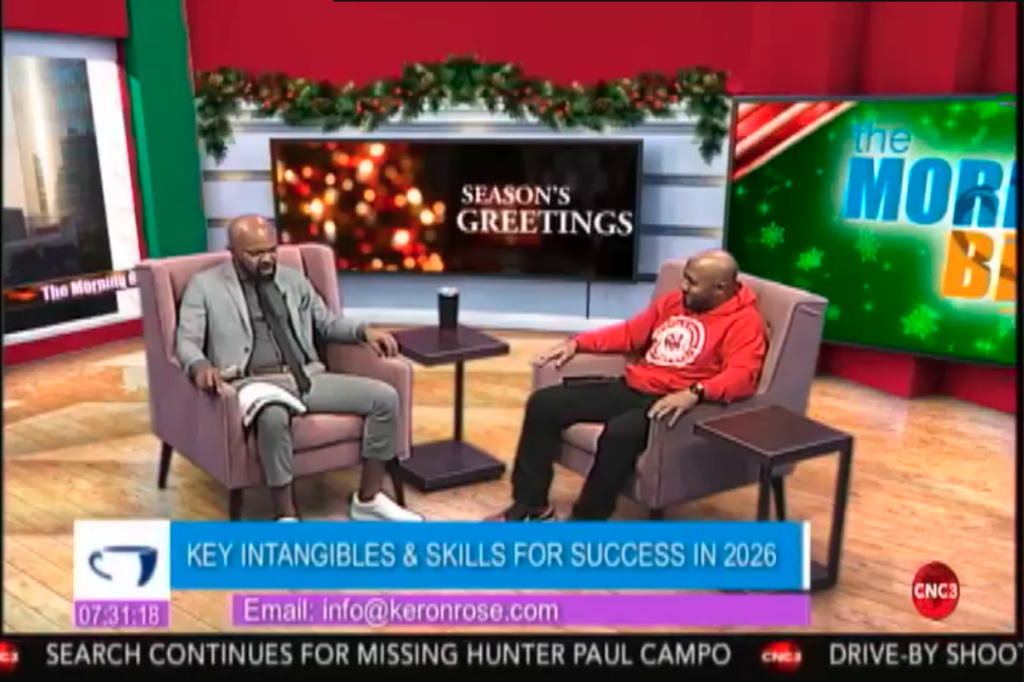
Local media builds legitimacy faster than most digital channels.
In many markets — especially in the Caribbean and other small economies — being featured on:
- Radio
- Television
- Newspapers
- Magazines
Instantly elevates perception.
It transfers institutional trust to you.
And once you’ve appeared once, future opportunities compound:
- One interview leads to another
- One article leads to commentary requests
- One quote leads to broader visibility
Journalists prefer familiar, reliable sources. When they know you can speak clearly and deliver value, you become part of their go-to network.
PR Strengthens the Entire Ecosystem
PR doesn’t sit on its own. It feeds everything else.
Media features can:
- Be referenced on your website
- Be linked in articles and case studies
- Be cited by AI tools and search engines
- Reinforce your positioning across social and audio platforms
This is especially important in the AI era, where authority is assessed through corroboration across sources.
A brand that is:
- Written about
- Quoted
- Referenced
- Discussed
Is far easier for AI systems to trust than one that only speaks about itself.
PR Is How You Move From “Creator” to “Reference”
Creators create content.
Authorities are referenced.
PR is one of the fastest ways to make that transition.
When your ideas appear in:
- News articles
- Industry publications
- Interviews and panels
You stop feeling like just another voice in the feed.
You become part of the conversation shaping the industry.
What Businesses Should Be Doing Differently in 2026
In 2026, businesses that want authority should:
- Proactively pitch insights, not promotions
- Tie their expertise to current events and industry shifts
- Build relationships with journalists over time
- Treat PR as an ongoing strategy, not a one-off win
PR is not about chasing fame.
It’s about earning relevance.
And when PR is combined with strong owned content, thoughtful video, and consistent messaging, it becomes one of the most powerful credibility multipliers in the entire digital ecosystem.
Which brings us to the final layer of the strategy: how all of this matters even more in small markets — and why blending traditional trust with digital reach is such a competitive advantage moving forward.
Ready when you are to move into the Caribbean context or the closing framework.
9. The Caribbean Context: Why Ecosystem Thinking Matters Even More in Small Markets
In large markets, businesses can sometimes survive on scale alone. Volume hides inefficiency. Reach masks weak trust. Algorithms can compensate for shallow positioning.
That luxury doesn’t exist in small markets — and especially not in the Caribbean.
Here, trust travels faster than reach, and reputation carries disproportionate weight. People don’t just buy based on what they see online — they buy based on who they’ve heard about, who others talk about, and who feels legitimate.
This is exactly why a video-only strategy is far more fragile in the Caribbean than elsewhere.
Traditional Media Still Carries Real Weight
Despite digital growth, traditional media in the Caribbean retains a level of credibility that social media simply doesn’t.
Being:
- Heard on the radio
- Seen on television
- Quoted in the newspaper
- Featured in a magazine
Immediately elevates perception.
For many audiences, these appearances still signal:
- Professionalism
- Seriousness
- Authority
A business seen only on Instagram may feel modern.
A business heard on the radio feels real.
That trust transfer is powerful — and it’s something Caribbean businesses can still access far more easily than global brands.
Small Markets Magnify Visibility — and Scrutiny
In small markets, people notice patterns quickly.
If you:
- Show up consistently across platforms
- Are referenced in the media
- Explain issues clearly and publicly
You become recognizable fast.
But the reverse is also true.
If your presence feels shallow — if your expertise exists only in clips, trends, or captions — that limitation becomes obvious just as quickly.
This is why authority-building matters more here, not less.
Ecosystems Beat Virality in Relationship-Driven Economies
Caribbean economies are relationship-driven. Decisions are influenced by:
- Familiarity
- Word of mouth
- Reputation
- Social proof
An ecosystem approach aligns naturally with this reality.
When someone:
- Sees your video
- Reads your article
- Hears you on the radio
- Notices your name in the media
It creates a sense of familiarity that no single post can replicate.
By the time a conversation starts, trust is already in place.
Why Caribbean Businesses Must Think Beyond Platforms
Platform dependence is especially risky in small markets.
- Audience size is limited
- Algorithms don’t localize well
- Reach caps out quickly
This makes diversification essential.
Owned assets, media presence, audio, search visibility, and PR allow Caribbean businesses to:
- Punch above their weight
- Extend influence beyond local borders
- Build authority that travels with them
That’s how local expertise becomes regional — and regional expertise becomes global.
The Strategic Advantage Few Are Using
Ironically, what many Caribbean businesses see as a disadvantage — a smaller market — is actually a strategic edge.
- Journalists are more accessible
- Media relationships are easier to build
- Expertise travels faster
- Authority compounds quicker
Those who understand this can establish themselves as default voices in their industries long before competition catches up.
In 2026, Caribbean businesses that win won’t be the ones posting the most content.
They’ll be the ones who are:
- Recognized
- Referenced
- Trusted
- Remembered
And that leads naturally to the final question this article needs to answer: what should businesses actually focus on doing differently moving forward?
That’s where we close.
10. What Businesses Should Actually Focus on in 2026
By this point, one thing should be clear: the challenge facing businesses in 2026 is not a lack of content ideas or platforms to post on. It’s a lack of strategic coherence.
Too many businesses are busy producing, but not positioning.
Active, but not authoritative.
Visible, but not trusted.
The reset required now is not about doing more — it’s about doing what matters.
Stop Chasing Volume. Start Building Leverage.
If your digital marketing strategy depends on constant output to stay relevant, it’s fragile by design. Algorithms change. Attention shifts. Burnout follows.
In 2026, sustainable growth comes from leverage:
- Assets that compound
- Ideas that travel across formats
- Presence that persists beyond any single platform
This means moving away from the mindset of:
“What do we need to post this week?”
And toward:
“What does our market need to understand about us before they choose us?”
Treat Video as a Component — Not the Strategy
Video remains valuable. But its role needs to be right-sized.
Video should:
- Spark interest
- Humanize expertise
- Open the door
It should not be expected to:
- Carry all credibility
- Replace explanation
- Substitute for proof
When video points to deeper assets — articles, case studies, media mentions, audio, documentation — it becomes far more powerful. When it stands alone, it expires quickly.
Build for Where Decisions Are Made, Not Just Where Attention Lives
Attention is scattered.
Decisions are deliberate.
In 2026, people decide in:
- Search engines
- AI tools
- Long-form content
- Trusted media
- Quiet moments of consideration
If your business only exists in feeds, you are absent at the moment that matters most.
Authority shows up where people slow down.
Invest in Authority Signals That Compound
Authority is cumulative.
It’s built through:
- Clear written thinking
- Consistent explanations
- Third-party validation
- Media presence
- Repetition across environments
This is why PR, owned content, audio, and participation in trusted platforms matter so much. They create signals that reinforce one another — for humans and for AI systems alike.
Over time, this shifts how people approach you:
- Fewer cold conversations
- Shorter sales cycles
- More trust before contact
Think in Ecosystems, Not Channels
The most effective businesses in 2026 will not be everywhere — they will be coherent.
They will:
- Use social media to amplify
- Use video to introduce
- Use writing to explain
- Use audio to build familiarity
- Use PR to validate
Everything connects. Nothing exists in isolation.
This is the difference between marketing that feels exhausting and marketing that feels inevitable.
The Real Shift Ahead
The future of digital marketing isn’t about creating more content.
It’s about being:
- Easier to understand
- Easier to verify
- Easier to trust
Especially in a world where people — and AI — are constantly asking:
“Who actually knows what they’re talking about?”
In 2026, the businesses that win won’t be the loudest or the most prolific.
They’ll be the ones that show up where learning happens, where confidence is built, and where decisions are made.
And that requires a balanced, intentional, authority-driven approach — not just more video.
PS… Before You Leave, Let Me Show You Something
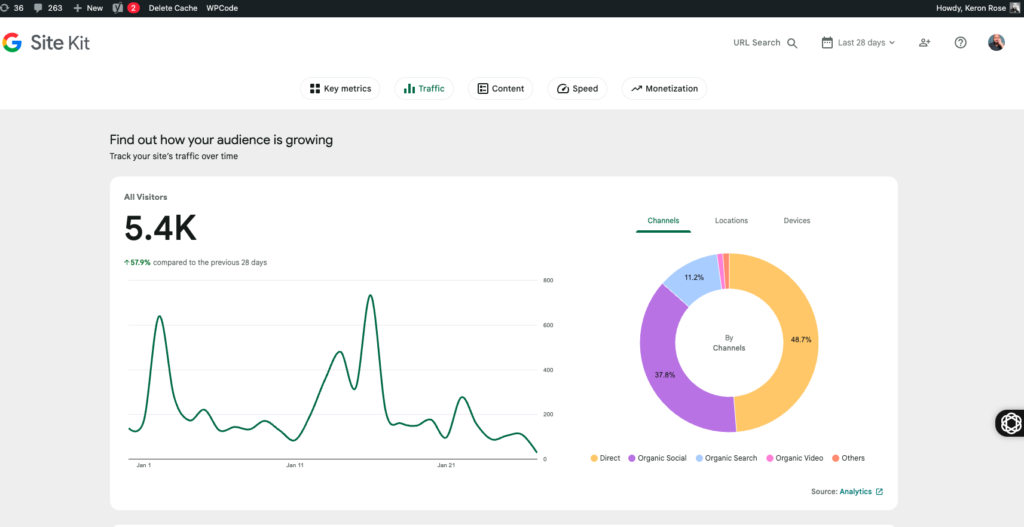
Before you click away, let me ground all of this in something real.
Over the last 28 days, 5,400 people visited my website.
Not because of one viral video.
Not because I “posted consistently.”
And not because I chased an algorithm.
They came from multiple sources — search, social, direct traffic, video, and other channels — all pointing back to owned content on my site.
This is what an ecosystem looks like in practice.
Now pause for a moment and ask yourself an honest question:
What would this traffic look like if I only focused on video… and only posted it to social media?
No blog.
No search visibility.
No long-form explanations.
No articles.
No assets that live beyond the feed.
Most of that traffic simply wouldn’t exist.
And that’s the part many businesses miss.
Social media content is fleeting.
Owned assets compound.
When you build blogs, articles, audio, media mentions, and videos that all point back to something you control, traffic doesn’t depend on a single platform behaving nicely this week. It comes from multiple directions, at different moments of intent.
Some people discover you on social.
Some find you through search.
Some come back directly because they remember you.
Some hear you, then look you up later.
That’s not luck.
That’s structure.
So as you think about 2026, don’t ask yourself:
“How do I make more video content?”
Ask yourself:
“What system am I building that makes it easy for people to find me, trust me, and choose me — no matter where they start?”
That shift alone will change how you approach digital marketing moving forward.
And it will save you from chasing platforms that were never designed to carry your business in the first place.
Need Help Building This for Your Business?
If this article made you realize that your digital marketing needs structure, not just more content, that’s exactly what I help businesses with.
In my 1-on-1 strategy sessions, we work through:
- Designing a digital ecosystem that fits your business
- Identifying which channels actually matter for your audience
- Turning scattered content into authority-building assets
- Reducing platform dependency and creating long-term leverage
These sessions are practical, strategic, and tailored — not generic advice.
👉 Book a 1-on-1 Digital Strategy Session:
https://keronrose.com/digital-strategist/
If you’re ready to stop guessing and start building a system that works in 2026 and beyond, this is the best place to start.